



Tariff Freeze Announced
In a move that offers considerable financial relief to millions, the Uttar Pradesh Electricity Regulatory Commission (UPERC) has decided to maintain the existing
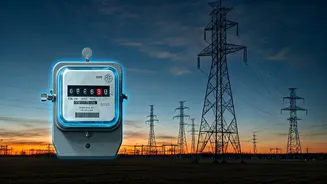
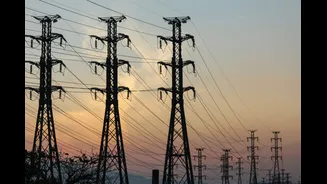
electricity tariffs for the fiscal year 2026-27. This marks an unprecedented seven-year period without any increase in power rates for consumers across the state. The decision, which is expected to be officially announced by the end of April and take effect from May 1st, will benefit over 3.5 crore electricity users. While presented as a regulatory decision based on the commission's findings, the timing is undeniably strategic, coming just before the crucial assembly elections scheduled for early 2027. Political observers highlight that in a state as politically significant as Uttar Pradesh, any hike in essential utility costs like electricity could have ignited public dissatisfaction. Therefore, keeping tariffs stable is seen as a calculated move to align with a governance narrative focused on citizen welfare and economic sensibility, especially given that power bills are a substantial component of household expenditure for many families.
Regulatory Surplus Explained
The primary justification for this sustained tariff freeze lies in a significant regulatory surplus accumulated by the UPERC. In its preceding tariff order, the commission had already identified a surplus exceeding Rs 18,500 crore, even after accounting for the sector's annual revenue deficit. This substantial financial cushion provides the regulator with ample flexibility to prevent tariff hikes without compromising regulatory principles. A senior official confirmed that there is no immediate technical necessity for an increase, thanks to this surplus. This surplus has largely materialized due to the implementation of stricter expenditure controls mandated by the 2019 tariff regulations. These regulations effectively capped allowable costs, leading to a situation where approved revenues consistently outpaced admissible expenditures. Furthermore, financial gains realized through the Central government's UDAY scheme, which involved the state assuming a significant portion of the discoms' outstanding debt, have also been recognized as a surplus that benefits consumers.
Discom Health Concerns
Despite the prevailing surplus, the underlying financial health of the state's power distribution companies (discoms) remains a persistent area of concern. Cumulatively, these discoms have accumulated losses surpassing Rs 1 lakh crore. The discoms themselves have frequently contested the regulator's methodologies and financial assessments, leading to several ongoing legal disputes before the Appellate Tribunal for Electricity (APTEL). The outcomes of these legal challenges are anticipated to exert a considerable influence on how future tariff revisions are approached. Interestingly, the discoms this year opted not to strongly advocate for a tariff increase, deferring the decision to the regulator. This suggests an acknowledgment of both the current surplus and the sensitive political environment, leading them to avoid pushing for a hike that could be politically contentious.
Electoral Strategy Significance
Political analysts interpret the decision to freeze electricity tariffs as an integral part of a broader electoral strategy. Shashikant Pandey, Head of Political Science at Dr. Bhimrao Ambedkar University, noted that this action aligns perfectly with the ruling party's established approach of leveraging welfare initiatives for political consolidation. He explained that in recent elections, the BJP has successfully combined the delivery of welfare schemes with targeted economic relief measures. Initiatives such as the Pradhan Mantri Ujjwala Yojana, Pradhan Mantri Awas Yojana, and the Free Ration Scheme have directly impacted the daily lives and finances of households. By keeping electricity tariffs unchanged, the government adds another tangible benefit to this basket, reinforcing the perception of a leadership that is attuned to the everyday financial concerns of its citizens. Pandey further emphasized that such decisions, while framed within regulatory frameworks, carry unmistakable electoral signals in a state as vital to national politics as Uttar Pradesh.
Expert Warnings Issued
However, energy sector experts issue a note of caution, suggesting that the current relief might be a temporary reprieve if fundamental structural inefficiencies within the power distribution network are not addressed. A power sector analyst based in Lucknow pointed out that the core issue extends beyond just tariffs, focusing instead on the operational vitality of the discoms. They highlighted critical challenges such as transmission losses, inaccuracies in billing processes, and an over-reliance on government subsidies. The expert warned that if these deep-seated operational problems are not rectified, the accumulating financial stress within the discoms will inevitably resurface and impact future tariff decisions. It's noteworthy that the UPERC had previously acknowledged that the accumulated surplus might even warrant a tariff reduction. However, the commission opted against this, citing the precarious financial standing of the discoms. The current strategy, therefore, appears to be a delicate balancing act: providing immediate consumer relief without exacerbating the financial strain on the utilities.