







Childhood Food Quirks
Actress Rashmika Mandanna fondly recalls her childhood days, where she was recognized for her penchant for creating unusual food combinations. Her father
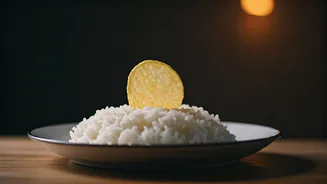
would playfully remark on her 'talent' for mixing food in ways that others might find strange. Among her notable childhood experiments were mixing Lays potato chips with curd rice and even with instant noodles. These adventurous pairings, while unconventional, were a source of amusement and pride for her family. Despite maintaining a strict diet for her acting career, Mandanna's palate has always been open to exploring novel flavor profiles and textures, a trait that seems to have been present since her early years. Her willingness to experiment with food highlights a playful and adventurous spirit that extended to her culinary choices from a young age.
The Science of Taste
Our perception of taste is a sophisticated interplay between the taste receptors on our tongue and the aromatic signals detected by our nose. This intricate biological process allows for the creation of unexpected flavor synergies when certain foods are combined. For instance, the salty notes of french fries can amplify the inherent sweetness of a milkshake, leading to a more complex and engaging taste experience. This phenomenon underscores the unique interaction of science, psychology, and personal experiences that shape our food preferences. Understanding this sensory interaction helps explain why seemingly disparate food items can create a harmonious and appealing flavor profile for some individuals, bridging the gap between what is perceived as normal and what is considered unusual.
Nostalgia and Cravings
The appeal of unusual food pairings can often be traced back to our early life experiences and the powerful influence of nostalgia. When we grew up enjoying a particular unconventional combination, like peanut butter with pickles on a sandwich, the familiar taste can evoke positive memories and a sense of comfort. This psychological connection can foster a craving for these unexpected pairings, as they become associated with feelings of security and happiness. Therefore, Mandanna's fondness for combining spicy noodles or curd rice with chips can be interpreted as a manifestation of childhood familiarity and cherished memories. These comfort foods, often simple and readily available, become markers of a simpler time, reinforcing a deep-seated emotional bond with certain food combinations.
Personality and Culture
Beyond personal history, an individual's personality and cultural background also play a significant role in shaping their acceptance of novel food combinations. Those who exhibit an adventurous disposition and are open to new experiences are more inclined to experiment with unusual food pairings, finding excitement in the novelty. Conversely, individuals who prefer routine and familiarity might find such strange combinations less appealing. Furthermore, culture significantly influences what is considered 'weird' or acceptable in cuisine. What might seem peculiar in one cultural context could be a staple delicacy in another; for example, the pungent durian fruit is a prized delicacy in Southeast Asia. Exposure to diverse culinary traditions can broaden our palates, fostering greater openness to trying new and unexpected flavors.