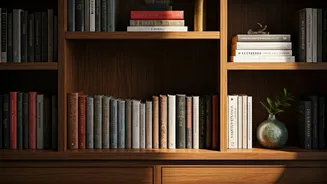







Books as Artful Decor
In contemporary Indian interiors, bookshelves and coffee table books have transcended their purely functional role to become significant decorative elements.
They are now viewed as canvases for personal expression, capable of injecting character and charm into any living space. The shift is evident as clients increasingly bring inspiration images of styled shelves to interior designers, indicating a strong demand for aesthetically pleasing book arrangements. This trend suggests that the visual impact of books, their colours, sizes, and bindings, plays a crucial role in defining the ambiance and sophistication of a room, signaling a certain taste or sensibility even before a page is turned. This new appreciation elevates books beyond mere storage, positioning them as integral components of interior design that contribute to a home's overall visual narrative.
Styling Your Shelves
Transforming a bookshelf into a visually appealing display involves more than simply placing books. Varied orientations, such as mixing vertical stacks with horizontal arrangements, introduce dynamic interest and prevent visual monotony. Color coordination can create striking gradients or monochromatic themes, harmonizing with the room's decor. Applying the 'rule of thirds' principle, which advocates for strategic empty spaces, allows books and decorative objects to stand out and prevents a cluttered look. Interspersing books with personal artifacts like sculptures, plants, framed photographs, or travel mementos further personalizes the display, making each shelf a unique reflection of its owner's journey and personality.
The Rise of Coffee Table Books
Coffee table books have emerged as particularly important decorative assets, celebrated for their substantial size, high-quality imagery, and engaging content, designed to spark conversation. Curating thematic collections based on individual interests, such as art, photography, travel, or fashion, creates a cohesive and inviting visual narrative. Layering books—placing a larger one flat and topping it with a smaller one—adds depth and dimension to arrangements. Strategic placement on coffee tables or consoles ensures they are easily accessible and visible, encouraging guests to engage with their content, thus serving a dual purpose of aesthetic enhancement and intellectual stimulation.
Cohesive Library Design
Achieving a cohesive library look requires aligning bookshelf styling with the broader interior design scheme. This involves carefully considering the room's existing color palette when selecting books and decorative items, ensuring a harmonious flow. Mixing textures, from glossy book covers and matte finishes to metallic accents and natural materials like wood or stone, adds tactile and visual richness. Adequate lighting is essential; accent lighting can draw attention to favorite books and objects, fostering a warm and inviting atmosphere. Ultimately, personalization is paramount, allowing the bookshelf to narrate a unique story by blending art books with well-loved paperbacks and items of sentimental value.
Bookstores' Evolving Role
Independent bookstores are witnessing a shift where customers, including interior designers, increasingly visit with specific color palettes and dimensions in mind, seeking visually appealing hardcover and leather-bound volumes. These books, often chosen for their aesthetic weight and durability, serve as decorative pieces in showrooms, cafes, and homes. While the primary purpose of a bookstore is to facilitate reading, there's a growing recognition of books as objects of visual appeal, driven partly by social media trends and the desire to create ambient spaces. This evolving demand highlights a dual market where books are valued both for their content and their capacity to enhance interior aesthetics, reflecting a complex relationship between reading and design.
Beyond the Shelf
The trend extends beyond private homes to public spaces like cafes, where books are integrated as part of the atmosphere. Reader's Coffee House in Noida, for instance, incorporates donated and purchased books that complement the café's lively yet subtle ambiance, encouraging patrons to read amidst coffee and conversation. This demonstrates how books can exist harmoniously as elements of decor without being the sole focus. For many, especially students with demanding schedules, the presence of books on shelves, even if not actively read, offers a visual reminder of intellectual pursuits and a connection to a past or desired habit of reading. It’s a candid admission that books can contribute to a space's design and overall look, symbolizing potential engagement.