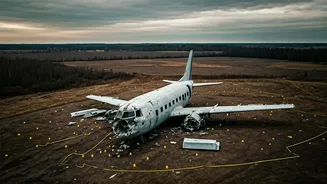








Crash Site Examination
The aftermath of the aircraft crash near Baramati is under intense scrutiny, with investigators focusing on several key areas. Senior DGCA officials are at the forefront,
meticulously examining the distribution of the wreckage to reconstruct the crash sequence. This involves detailed photography and analysis to determine the aircraft's trajectory, velocity, and the impact dynamics. The objective is to piece together the final moments before the crash. The investigation also involves analyzing the impact point, which can provide insights into the aircraft's orientation and altitude at the time of the impact. The goal is to comprehensively understand the factors contributing to this unfortunate incident.
Weather Conditions Examined
A primary focus of the investigation revolves around weather conditions, with dense fog in the Pune district and the Baramati region identified as a significant factor. Investigators are carefully assessing the impact of the fog on the aircraft's course and navigation. They are reviewing meteorological data, including visibility reports and weather radar information, to understand the severity of the fog at the time of the crash. The analysis also includes examining how weather conditions interacted with the aircraft’s operation. The investigation looks into how the pilots navigated during this challenging environment. This comprehensive review aims to determine the extent to which the weather contributed to the unfortunate incident.
Cockpit Voice Recorder
Crucial to the investigation is the analysis of the cockpit voice recorder (CVR). Experts are reviewing the pilots' final conversations and interactions to understand the events leading up to the crash. The CVR data provides invaluable insights into the crew's actions, responses, and any alerts or warnings received during the flight. This examination is essential to reconstructing the final moments and understanding the challenges faced by the pilots. Investigators are meticulously transcribing and analyzing the audio data to identify any critical communication, decisions, or potential issues that may have contributed to the accident. The detailed study of the CVR promises to offer critical clues regarding the events that resulted in the crash.
Air Traffic Control Data
Alongside the CVR, official air traffic control (ATC) communications are being rigorously examined. The probe involves analyzing all interactions between the aircraft and ATC to establish what went wrong. This includes examining flight plans, instructions, and any communications related to the aircraft's navigation and positioning. The ATC data provides a critical perspective on the flight's progress and any potential deviations or challenges faced. Investigators will thoroughly review the ATC recordings to pinpoint any operational issues. The aim is to reconstruct the sequence of events leading up to the crash and understand the information available to the pilots. All these efforts will provide crucial information to ensure aviation safety in the future.
External Factors Analysis
The investigation extends to external factors that might have played a role in the accident. This includes an assessment of runway positioning and any related operational procedures. Wind patterns at the time of the crash are being carefully considered to understand their potential impact on the aircraft. Every aspect of the aircraft's flight path, its environment, and how it was operated at the time of the crash is being examined. By thoroughly evaluating these factors, investigators aim to have a detailed understanding of the conditions under which the aircraft was operating and any potential contributing elements. This comprehensive analysis hopes to provide answers about the cause of this unfortunate event.
Ajit Pawar's Political Career
Ajit Pawar's role as Maharashtra's longest-serving deputy chief minister is a significant facet. He served non-consecutively for six terms under various governments. His career highlights his deep involvement and influence within Maharashtra's political landscape. His extensive experience and the duration of his tenure provided him with profound insights into the state's governance. This background reflects his significant contributions to the state's political dynamics and policy formulation. His legacy is now associated with the circumstances of his passing, marking a poignant end to a dedicated political career and leaving a significant impact on Maharashtra's political arena.