







A Taste of Triumph
Following a resounding victory in the West Bengal Assembly elections, the Bharatiya Janata Party (BJP) orchestrated a celebration that was as rich in local
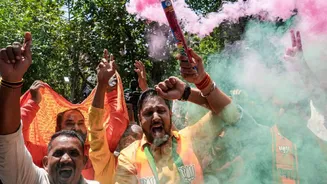
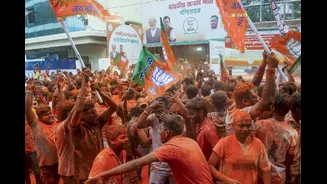
flavor as it was in political significance. Supporters erupted in jubilation across the state, their cheers accompanied by the vibrant hues of 'aabir' and the rhythmic beat of drums. However, the celebrations were notably anchored in the culinary traditions of Bengal. Instead of generic festivities, the party embraced local delicacies, transforming them into edible symbols of their hard-won success. This strategic choice of celebratory fare served a dual purpose: it countered prevailing narratives and underscored the BJP's commitment to embracing the regional identity. The spontaneous joy was palpable, with party workers engaging in traditional celebratory acts like distributing sweets and smearing colors, all while partaking in food that resonated with the Bengali palate, signifying a deep understanding and respect for local customs.
Jhaalmuri's Political Zing
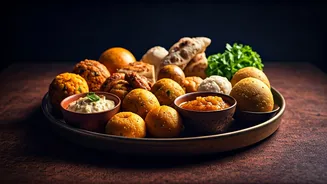
A key highlight of the BJP's victory celebrations was the prominent inclusion of 'jhaalmuri,' a popular Bengali street snack. This choice was particularly poignant, referencing a memorable campaign moment when Prime Minister Narendra Modi was seen enjoying the same snack in Jhargram. This act had previously sparked a lively exchange with rival parties, with the Trinamool Congress dismissing it as a staged event. Modi's retort, 'Jhaalmuri maine khaya, par jhaal TMC ko laga' (It was I who ate the Jhaalmuri, but it was the TMC that felt its heat), cleverly turned the snack into a symbol of political impact. By reintroducing 'jhaalmuri' at the victory celebrations, the BJP effectively reinforced this narrative, demonstrating that the snack had indeed 'reached Delhi' and become a part of a national triumph, all while celebrating Bengal's very own culinary identity.
Countering Narratives with Cuisine
During the election campaign, the Trinamool Congress had propagated a narrative that a BJP government would restrict the consumption of popular food items like fish and meat. The BJP's victory celebration strategy directly addressed and countered this misinformation by prominently featuring these very ingredients. In areas like Alipore, jubilant supporters indulged in dishes like chicken biryani, fish preparations, and traditional sweets like 'jalebi.' This culinary defiance sent a clear message: the BJP's victory was not about imposing external dietary norms but about respecting and embracing the food choices of West Bengal. One supporter articulated this sentiment, stating, 'It was a lie spread against the BJP. Everyone can eat whatever they want, be it fish or meat,' directly refuting the opposition's claims through their celebratory meal.
A Deliberate Bengali Menu
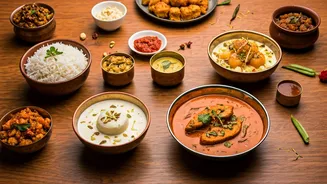
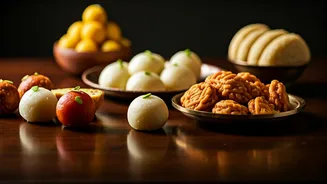
The BJP's state office in Salt Lake presented a meticulously planned menu, showcasing quintessential Bengali cuisine to approximately 300 attendees. The spread included staple dishes like rice, dal, and vegetables, elevated by the inclusion of traditional Bengali specialties such as fish head curry and 'katla' fish curry. A senior BJP leader explained the symbolic significance, stating, 'In Bengal, every auspicious occasion begins with fish. Today is a very auspicious day for us and that is why the BJP will celebrate it with fish.' This choice underscored a deep cultural understanding, positioning the fish-centric meal as a fitting tribute to a momentous occasion. The dessert selection further highlighted regional pride, featuring traditional Bengali sweets like 'laddoos,' 'rosogollas,' and a substantial quantity of 'sandesh,' reinforcing the celebration of West Bengal's unique sweet traditions.
Regional Pride on a Plate
State BJP chief Sukanta Majumdar eloquently articulated the broader symbolism of the celebratory feast. He emphasized that serving 'fish and rice'—staple Bengali dishes—to the people was a deliberate act. Majumdar countered the TMC's insinuations that 'Delhi would bring its culture to West Bengal,' pointing out that 'jhaalmuri has now reached Delhi,' signifying a reciprocal cultural embrace rather than imposition. This sentiment was echoed across the country, with BJP leaders and supporters in states like Karnataka and even in the capital, New Delhi, joining the celebration by serving 'jhaalmuri' and Bengali sweets. The Union Finance Minister and the Chief Minister of Delhi also took to social media to share their enjoyment of these distinctively Bengali treats, underscoring the national resonance of the regional victory celebration.