
What Is It?
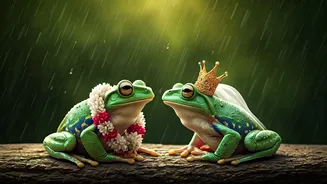
Frog weddings are age-old ceremonies performed in India with the central aim of invoking rainfall. These rituals, often conducted when the monsoon season
is delayed or when drought conditions persist, feature the symbolic marriage of two frogs, usually a male and a female. The belief underpinning this practice is that the marriage will please the rain gods, prompting them to send rain. The wedding ceremonies themselves mirror traditional human weddings, complete with processions, music, and feasting. The specific rituals and customs can vary significantly across different regions, reflecting the diverse cultural landscape of India. The ceremonies often involve local communities participating and celebrating the event with the aim of ensuring a good harvest and the well-being of their community. The choice of frogs is also symbolic as they are creatures associated with water and the monsoon season.
Origins Unveiled
The origins of frog weddings can be traced back to ancient agricultural practices, where the dependence on rainfall was critical for crop success. The rituals likely evolved from a need to address the uncertainty of weather patterns and secure the community's survival. Over time, these practices became deeply embedded in local traditions, acquiring religious significance and cultural importance. Historical evidence, though often passed down orally, suggests that these ceremonies were prevalent across India for centuries. As farming practices developed, communities relied on natural phenomena such as the monsoon, and any disruption posed a threat to their survival. Thus, rituals such as frog weddings were seen as a way to engage with the elements and hope for favorable conditions. These traditions provided a social cohesion and a shared sense of hope during times of crisis. Though the exact starting point of the ritual remains unclear, its roots are undeniably linked to the deep reliance of Indian communities on natural cycles.
Regional Variations
The ways frog weddings are performed in India reveal an extensive and diverse tapestry of traditions. Across different regions, the rituals vary in detail, reflecting distinct cultural and religious influences. In some areas, the weddings are grand affairs with elaborate decorations, music, and dances, whereas in others, they are simpler, community-led events. The choice of rituals, the specific prayers recited, and the offerings made all vary significantly from one location to another. Some communities might favor specific types of frogs for the ceremony, while others might focus on the involvement of particular deities or religious figures. For instance, in certain regions, the frogs are adorned with traditional wedding attire, and the ceremony may replicate all the steps of a typical human marriage. The music and dances accompanying the wedding also differ based on the local artistic traditions. Understanding these regional variations offers a deeper appreciation of the cultural richness and variety that exists across India, showcasing the unique ways that different communities engage with their environment and seek divine blessings.
Modern Relevance
Even in an era of scientific advancements and climate change awareness, frog weddings persist, indicating their continued relevance and adaptability. In times of prolonged drought or delayed monsoon seasons, these ceremonies act as a symbol of hope and community solidarity. The rituals offer a shared experience that reinforces communal ties and allows people to actively engage with their environment. Moreover, they act as a reminder of the historical relationship between communities and nature, reinforcing the importance of respecting natural cycles. Despite criticisms and scientific explanations, frog weddings are often seen as a way to maintain cultural identity and preserve age-old traditions, particularly in rural communities. The practice also highlights the resilience of local cultures in responding to modern challenges and the importance of preserving traditional knowledge systems. This tradition prompts reflection on the value of local customs in building community solidarity and promoting a harmonious relationship between humans and their environment.
Faith and Science
The frog wedding tradition presents an interesting interplay between faith, science, and social dynamics. While the scientific community may not validate the direct influence of frog weddings on rainfall, the practice does serve an important social and psychological function. The ceremonies bring communities together, foster a sense of hope, and offer a space for collective action during environmental challenges. Furthermore, they are a powerful example of how communities express their relationship with nature. The practice allows locals to connect with their environment on a deeper level, reminding them of their reliance on natural cycles. The performance of these rituals also helps to retain cultural heritage by preserving traditional knowledge. In a world increasingly shaped by scientific insights, these ceremonies act as a reminder of the role of tradition and cultural resilience in a changing climate. While science provides rational explanations for weather patterns, the emotional and social benefits of such rituals are undeniable.