






The Telephone's Skeptics
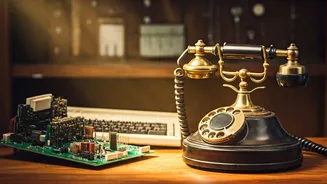
Imagine a world without instant communication. That was the reality before Alexander Graham Bell's telephone. When Bell first demonstrated the device,
the reaction was far from enthusiastic. Critics questioned the practicality of speaking into a box to communicate with someone miles away. People found it hard to believe that voices could be transmitted over wires, and many saw it as a mere novelty. The initial investment in infrastructure was also a barrier. Despite this initial skepticism, the telephone's potential for business and personal communication was undeniable, and it gradually gained acceptance. The ability to connect people across vast distances transformed society, revolutionizing business practices and personal relationships alike. This innovation, once ridiculed, became essential for daily life.
Automobiles: Horseless Carriages?
Before the automobile, the world moved at the pace of horses. When early automobiles began to appear, they were met with considerable skepticism and even mockery. These 'horseless carriages' were seen as unreliable, dangerous, and expensive toys for the wealthy. The primitive engines and the lack of roads were significant drawbacks. Many people preferred their horses, viewing automobiles as noisy and impractical. Furthermore, the early cars frequently broke down and were challenging to repair. Despite the initial negativity, pioneers such as Karl Benz and Henry Ford persisted, refining the design and making automobiles more accessible. The invention brought unprecedented mobility, changing urban planning, personal freedom, and industrial practices. The automobile's widespread adoption demonstrated the triumph of innovation over initial resistance.
The Lightbulb's Dim Start
Before the lightbulb, darkness fell with the sun. Early electric lighting, including Thomas Edison's incandescent lightbulb, was initially met with doubts. People questioned the efficiency and safety of electric light, which was competing with the well-established gas lamps. The cost of electricity and the need for new infrastructure, such as power plants and wiring, added to the concerns. Gas lighting was the norm, and electric lights were viewed as a costly and unnecessary alternative. Additionally, there were concerns about electrical fires. However, the lightbulb offered significant advantages in convenience, cleanliness, and safety. Edison's relentless efforts to improve the design, along with the growing availability of electricity, gradually won over the public, eventually making the lightbulb a symbol of progress.
Airplanes: Flying Machines?
The Wright brothers' first flights at Kitty Hawk in 1903 sparked both wonder and skepticism. The idea of heavier-than-air flying machines was met with significant doubt. Many people found the idea of humans flying in the sky impossible or foolish. Early airplanes were seen as fragile, unreliable, and potentially deadly contraptions. There were doubts about their practicality and usefulness, as well as safety concerns. Early aviation enthusiasts faced widespread public disbelief and even ridicule. Despite the initial hurdles, the Wright brothers and other pioneers relentlessly improved aircraft design, overcoming many obstacles. Aviation would transform travel, warfare, and global connectivity, eventually proving the initial doubters wrong.
The Radio's Early Noise
Before the widespread adoption of the radio, communication often depended on telegraphs and printed news. Early radio technology, developed by figures like Guglielmo Marconi, was initially met with disbelief. People found it hard to imagine how sound could travel through the air without wires. Critics questioned the practical applications of radio and its potential to be a reliable form of communication. The early radios were unreliable, and reception was often poor. Furthermore, there were legal challenges and issues concerning who could control the airwaves. However, the radio's potential for mass communication, entertainment, and emergency services was quickly recognized. Over time, radio transformed how the world received news and entertainment, becoming a global cultural phenomenon.
The Computer's Room!
The early computers, occupying entire rooms, faced significant criticism. In the beginning, these massive machines were complex to operate and extremely expensive to maintain. Many viewed computers as impractical, believing they were useful only for specialized tasks in science and engineering. The concept of a computer being a personal tool was far from reality. The initial cost and the limited access meant that computers were inaccessible to most people. Moreover, the first software and programming languages were difficult to use, limiting their broader appeal. However, as the technology improved, computers became smaller, more powerful, and cheaper. The invention was destined to revolutionize every aspect of society, from business to education, proving early skeptics wrong.
Personal Computers' Skeptics
The introduction of the personal computer in the late 1970s and early 1980s was met with considerable skepticism. Many people found the idea of owning a computer for personal use to be unnecessary, expensive, and complicated. There were questions about what a typical person would even do with a computer at home. Initial criticisms included high prices, complex software, and a lack of user-friendly interfaces. The idea of personal computing was considered more a niche hobby for tech enthusiasts than something the average person needed. The personal computer would change the way people worked, communicated, and entertained themselves. As computers became more affordable and user-friendly, the personal computer revolutionized work and leisure.
The Internet's World Wide Web
The early days of the internet were a far cry from today's interconnected world. When the World Wide Web was first introduced, many people struggled to grasp its potential. It was seen as complicated, slow, and lacking practical applications. Access was limited, and the early websites were primitive, offering limited content. Many people questioned the need for this new technology. Security concerns and the digital divide were major obstacles. The internet, however, brought unprecedented access to information, global communication, and e-commerce. As the web evolved, it transformed how the world accessed information, conducted business, and connected with others, proving early doubters wrong.