





A Riverine Surprise
India, often lauded as a land graced by significant waterways like the Ganga and Brahmaputra, holds a lesser-known geographical curiosity within its borders.
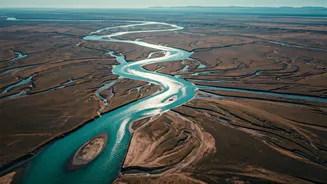
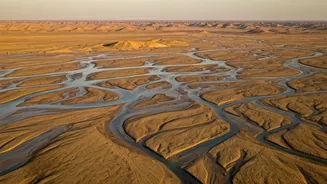
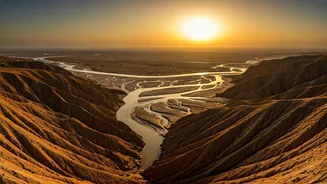
Gujarat's Kutch district stands apart, astonishing many with the sheer volume of rivers flowing through its terrain. It's estimated that Kutch is home to approximately 97 distinct rivers, a figure that often stumps even seasoned trivia enthusiasts. This remarkable abundance of waterways creates a captivating contrast with the district's predominantly arid and desert-like environment, challenging common perceptions of such landscapes. These rivers, primarily seasonal in nature, contribute to a distinctive drainage system, with many ultimately flowing into the Arabian Sea or vanishing into the expansive Rann of Kutch. This unique characteristic positions Kutch as an extraordinary region in India's vast hydrological tapestry, offering a compelling narrative of nature's resilience and adaptability in diverse climatic conditions. The presence of so many rivers in a region typically associated with dryness highlights the intricate and often unexpected ways in which geographical features can manifest, making Kutch a truly distinctive area for exploration and understanding.
Seasonal Waterways Emerge
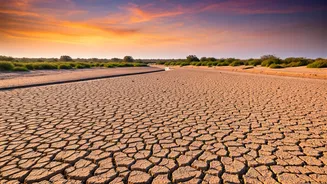
The rivers of Kutch, while numerous, largely operate on a seasonal basis, springing to life predominantly during the monsoon months. For the majority of the year, these riverbeds often appear as dry channels, a testament to the region's challenging climate. However, the arrival of the monsoon transforms these arid landscapes, breathing life into the network of streams and rivers. These temporary waterways play a crucial role in the district's ecosystem, providing vital water resources during a specific period. Their existence, even if fleeting, underscores the adaptive nature of life in such environments. While many of these rivers directly feed into the Arabian Sea, a significant portion also finds its end within the vast, shimmering expanse of the Rann of Kutch. This unique confluence of arid conditions and a dynamic river system creates a fascinating natural phenomenon that is characteristic of Kutch's distinct geographical identity, showcasing nature's ability to thrive even in seemingly inhospitable terrains and contributing to the district's overall hydrological complexity.
Notable Rivers Flow
Among the prominent waterways gracing the Kutch district, several names are frequently mentioned, contributing to its unique riverine profile. Rivers such as the Rukmavati, Suvi, Malan, Saran, Sakar, Mithi, Ghurud, Vekhdi, Chang, Khari, Nara, Panjora, Kharod, Kotri, Kali, Kanakavti, and Rudramata are integral to the region's hydrological system. Beyond these established names, a multitude of smaller, unnamed streams emerge with the onset of the monsoon rains, meandering through the landscape before gradually receding and disappearing as the dry season returns. This extensive network of both major and minor rivers highlights the intricate water channels that crisscross Kutch. Many of these rivers embark on journeys that culminate either in the Arabian Sea or disappear into the vast, saline plains of the Rann of Kutch. This intricate system, including rivers like Banas, Saraswati, Rupen, Luni, Machhu, Ghodadhroi, Brahmani, Khari, Phalki, Nara, Suvi, Pur, and Bhurud, forms a cohesive drainage pattern that is as remarkable as it is vital for the region's environmental balance and ecological sustenance, demonstrating nature's intricate design.
A Saline Challenge
A significant characteristic defining many of Kutch's rivers is their inherent seasonality, meaning they are most active and carry substantial water volumes solely during the monsoon period. After this brief but crucial interval, these waterways tend to diminish significantly, often reducing to dry, sandy beds for the remainder of the year. Compounding this cyclical existence, a notable issue faced in several areas is the increasing salinity of the river waters. This elevated salt content presents a considerable challenge, often limiting the usability of the water for essential daily needs and agriculture, which are critical for the local populace. Despite these environmental constraints, the persistent presence and flow of these rivers, however temporary or saline, are a powerful demonstration of nature's enduring capacity to carve out water pathways even within challenging, arid environments. The district's unusual river network continues to be a source of fascination, underscoring the resilience of natural systems and the unique geographical wonders found within India.