



Barn Owl's Silent Hunt
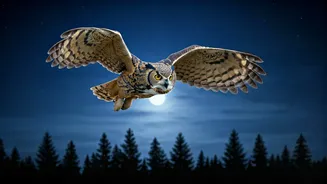
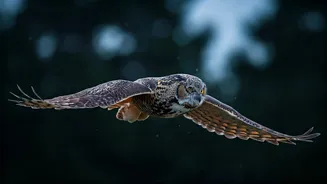
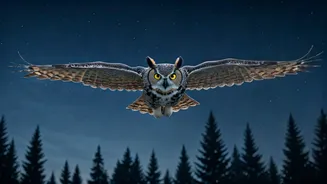
The barn owl, instantly recognizable by its ethereal white plumage and heart-shaped facial disc, is a quintessential nocturnal predator. Its most impressive
adaptation is its extraordinary auditory prowess, allowing it to pinpoint the exact location of prey scurrying through the undergrowth, even in absolute darkness. Coupled with its incredibly soft, fringed wing feathers that enable completely silent flight, the barn owl can descend upon unsuspecting small mammals, such as mice and voles, with unparalleled stealth and precision. The eerie, haunting screeches often associated with these owls further amplify their mysterious reputation as phantom hunters of the night.
Tawny Frogmouth's Disguise
Often mistaken for an owl due to its appearance, the tawny frogmouth is a champion of disguise, spending daylight hours perfectly camouflaged against tree bark. Once night falls, this master of deception transforms into an adept hunter, subsisting on a diet of insects, small rodents, and even amphibians. A key distinction from owls is its hunting method; instead of talons, the frogmouth uses its remarkably wide beak to snatch prey. This specialized mouth structure, capable of opening to a considerable width, is highly effective for capturing agile flying insects mid-air, making it a silent, swift catcher of its nighttime meals.
Common Nighthawk's Twilight Flight
The common nighthawk is a marvel of aerial agility, dedicating its active hours to hunting flying insects like moths and beetles. Its cryptic coloration and unpredictable, darting flight patterns make it exceptionally difficult to spot against the twilight sky. Unlike many birds that are fully active at night, nighthawks are primarily crepuscular, meaning they are most energetic during the transitional periods of dusk and dawn. Their distinctive, high-pitched "peent" call is a familiar sound that punctuates the fading light, signaling their presence as they patrol the skies for airborne sustenance.
Great Horned Owl's Dominance
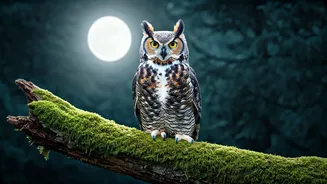
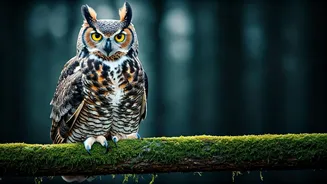
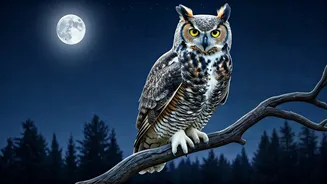
As one of the most powerful and adaptable avian predators of the night, the great horned owl commands respect in its nocturnal domain. Its large, luminous yellow eyes are perfectly suited for exceptional vision in low light conditions, allowing it to scan vast territories for potential meals. This formidable hunter is equipped with incredibly sharp talons, enabling it to capture a diverse range of prey, including rodents, rabbits, and even other birds. The deep, resonant hooting call of the great horned owl is an iconic sound, a familiar signature of the wilder nocturnal landscape.
Oilbird's Cave Navigation
In a remarkable departure from most nocturnal species, the South American oilbird employs echolocation, a technique akin to that used by dolphins, to navigate the absolute blackness of the caves it calls home during the day. This unique ability allows it to orient itself and avoid collisions while flying. By night, these fruit-loving birds venture out to forage for palm and avocado fruits. Their capacity to emit clicking sounds and interpret the returning echoes is a rare trait among birds, adding a layer of profound mystery to their existence in the subterranean world and their nightly foraging flights.
Black-crowned Night Heron's Patience
The black-crowned night heron stands apart from typical nocturnal birds of prey; it is a waterbird that actively hunts in aquatic environments after the sun sets. Its preferred hunting grounds are shallow waters, where it patiently stalks fish, frogs, and crustaceans under the cloak of darkness. Characterized by its hunched posture and striking red eyes, this heron employs a strategy of stillness and swift action, striking its unsuspecting prey with remarkable speed. The haunting, often drawn-out calls of this bird are a distinctive sound heard in wetland and coastal regions once evening descends.