




Summit Impact on Travel
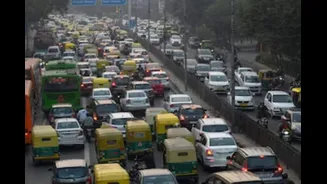
The AI Impact Summit 2026, held from February 16th to 20th at Bharat Mandapam, necessitated extensive traffic management in Delhi. To ensure the smooth
flow of delegates and maintain security for the five-day event, which saw participation from numerous countries and high-profile individuals, the Delhi Police implemented significant traffic regulations. These measures primarily affected the New Delhi district and surrounding areas. Essential services, such as emergency medical vehicles, were prioritized to ensure uninterrupted access. For the general public, designated alternate routes and transport options were provided to minimize inconvenience. The summit, focusing on the impact and responsible development of artificial intelligence, brought together global leaders, tech innovators, and policymakers, making coordinated traffic control crucial for its success.
Navigating Railway Stations
For travelers heading to or from Delhi's major railway stations during the AI Impact Summit, specific route adjustments were in place. For New Delhi Railway Station, commuters could follow a path via ISBT Kashmiri Gate, Boulevard Road, Rani Jhansi Marg, DBG Road, Ashram Chowk, Ring Road, Raj Ghat, Vande Mataram Marg, Dr. Ambedkar Marg, Panchkuian Road, and Connaught Place Outer Circle. Those using Old Delhi Railway Station were advised to navigate via ISBT Kashmiri Gate, Ring Road, Hanuman Mandir, S.P. Mukherjee Marg, Ashram Chowk, Raj Ghat, Vande Mataram Marg, Dr. Ambedkar Marg, Rani Jhansi Marg, Boulevard Road, and Lothian Marg. For Hazrat Nizamuddin Railway Station, routes included AIIMS, Ring Road, Ashram Chowk, Mathura Road, and ISBT Kashmiri Gate, with subsequent connections via Ring Road and Raj Ghat. These diversions aimed to channel traffic away from sensitive summit routes while ensuring access to key transportation hubs.
Airport Travel Advisory
Delhi Airport issued a specific travel advisory for travelers during the AI Impact Summit, recognizing potential impacts on journeys to and from the terminals. Passengers were strongly encouraged to plan their travel in advance and consider alternative public transport options to mitigate potential delays and congestion. The advisory highlighted the Delhi Metro as a convenient alternative, suggesting the Magenta Line for Terminal 1 and the Airport Express Line for Terminals 2 and 3. For those opting for road travel, routes were provided from Gurugram, Dwarka, New Delhi, South Delhi, West Delhi, and North & East Delhi, often utilizing NH-48, Outer Ring Road, UER II, and specific metro link roads. These recommendations aimed to provide clear guidance for reaching airport terminals efficiently amidst the event-induced traffic regulations.
School and Exam Routes
With the AI Impact Summit coinciding with the start of CBSE examinations on February 17, 2026, a dedicated traffic advisory was issued for students and schools. Delhi Police coordinated measures to minimize disruptions for exam candidates. Ten specific schools situated along main VIP movement routes were identified, with nodal officers from the Traffic Police deployed to assist students and staff. Suggested routes and nodal officer contact details were communicated to the Transport Department and school managements. For instance, Atal Adarsh Sr. Sec Vidyalaya at Tilak Marg had two suggested routes involving Sarai Kale Khan, Ring Road, IP Flyover, BSZ Marg, and Tilak Marg. Similarly, other schools like Navyug Sr Sec School and Kitchner Road-SV Kitchner Road had detailed alternative routes provided, often utilizing Aurobindo Marg, Vande Mataram Marg, and Ring Road diversions, ensuring students could reach their examination centers without significant inconvenience.
Major Affected Roads
During the AI Impact Summit, numerous key roads in Delhi were either restricted or saw significant traffic congestion. Major affected stretches included Mathura Road (between Zoo and Tilak Marg), Subramania Bharti Marg, Rajesh Pilot Marg, Tees January Marg, Akbar Road, Teen Murti Marg, Mother Teresa Crescent, Sardar Patel Marg, Janpath, Firoz Shah Road, Shanti Path, and Satya Marg. Additionally, areas like Africa Avenue, Kamal Ataturk Marg, APJ Abdul Kalam Road, and C-Hexagon experienced disruptions. The advisory detailed specific alternative routes for these affected roads. For example, Mathura Road diversions involved Ring Road and BSZ Marg, while Subramania Bharti Marg suggested routes via Arc Bishop Makarius Marg. This comprehensive list, covering over 20 major roads and their suggested alternatives, was crucial for commuters to plan their journeys and avoid the primary zones of activity related to the summit.
Restricted Zones & Roads
Specific zones and roads were designated as restricted areas, prohibiting general vehicle entry to facilitate the smooth movement of VVIPs and summit delegates. Bhairon Marg, excluding the Ring Road T-Point, and Mathura Road, from Subramania Bharti Marg T-Point to Dr Dinesh Nandini Dalmia Chowk, were among these critical arteries. Delhi Police explicitly stated that general vehicle entry would not be permitted during route movements in these areas. Beyond these primary restricted zones, a more extensive list of nearly 49 roads was recommended for avoidance by commuters. This included stretches like Tilak Marg, Bhagwan Das Road, Central Spine Road, and various Margs like Rajesh Pilot Marg and Tees January Marg. The aim was to guide all vehicular traffic away from sensitive areas, ensuring maximum efficiency for summit-related movements and minimizing disruption for the general public.