





A Scientific Pivot
Amrinder Singh, armed with a Master's degree in Physics and a background in running a laboratory equipment business in Bengaluru, made a significant career
shift. Observing the widespread use of exotic vegetables and premium leafy greens in urban culinary scenes, he felt inspired to bring these high-value crops back to his native Punjab. He returned to his village in 2006 with a vision to cultivate what the market desired rather than adhering to traditional farming practices. This initial research-driven approach, starting with just an acre of lettuce and other exotic greens, gradually expanded to encompass his entire 6.5 acres of farmland by 2014-15, laying the groundwork for a highly profitable and unconventional agricultural enterprise.
A Bounty of Greens
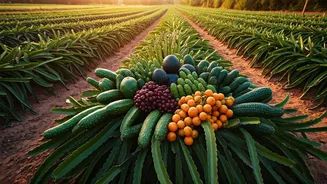
Today, Amrinder's farm is a vibrant tapestry of premium produce, featuring crops seldom seen in the region. His fields yield an array of sought-after items such as diverse lettuce varieties, peppery rocket leaves (arugula), fragrant basil, delicate leeks, nutrient-rich kale, fresh parsley, and crisp celery. Alongside these, he cultivates visually striking colourful broccoli, cauliflower, and cabbage. This specialized selection directly serves a growing niche market, primarily catering to the premium hospitality sector, including hotels, restaurants, and bakeries. These ingredients are no longer confined to simple salads; they are integral to sophisticated culinary creations, with rocket and basil adding flair to cake decorations and kale, parsley, and celery forming the base of numerous international dishes.
Profitable Cultivation
The financial rewards of transitioning to exotic vegetable farming have been substantial for Amrinder. Depending on the specific crop, its quality, and prevailing market demand, his produce commands prices ranging from Rs 150 to Rs 350 per kilogram. Certain high-demand items, like Korean onions, bell peppers, and seedless cucumbers, can generate an impressive Rs 10–12 lakh per acre. With two distinct cropping cycles annually, his farm's total revenue after accounting for all operational expenses reaches an impressive Rs 60–70 lakh. This financial success is a testament to his strategic crop selection and effective market positioning, significantly outperforming conventional crops.
Smart Farming Systems
Amrinder's farm operates as a meticulously organized and scientifically managed agricultural system. Of his 6.5 acres, one acre is specifically dedicated to growing bell peppers under a controlled polyhouse environment, while the remaining 5.5 acres are utilized for open cultivation. Different zones are designated for particular crops, ensuring optimal diversity and operational efficiency. He has developed his own advanced nursery system, nurturing seedlings on-site before transplanting them into the fields. A key element of his strategy is staggered crop cycling, which guarantees year-round production and a steady income stream. For instance, rocket leaves are ready for repeated harvests within 35–40 days and continue producing for up to six months, while lettuce and spring onions require a longer period of five to six months from nursery to harvest.
Continuous Harvest Cycle
The farm's production schedule is designed for continuous output, with seasonal crops like broccoli and cabbage harvested primarily between January and April. Following these, other varieties are systematically rotated throughout the remainder of the year. Amrinder emphasizes this as a "continuous process," explaining that the cultivation of different varieties suited to various seasons ensures a consistent flow of production and, consequently, a steady income. This methodical approach to crop rotation and seasonal planning is fundamental to maintaining profitability and mitigating the risks associated with relying on a single harvest period, creating a resilient and dependable farming operation.
Market Reach and Logistics
Amrinder's premium produce finds its way to a discerning clientele primarily across the tri-city region of Chandigarh, Mohali, and Panchkula. His market also extends to cities like Ludhiana, Delhi, and Jammu. While he operates a retail outlet named "Exotic Cart" in Chandigarh, his primary focus and largest revenue stream comes from bulk supplies to institutional buyers such as hotels, restaurants, and bakeries. To preserve the freshness and aesthetic appeal crucial for his premium customers, the leafy produce is harvested with great care and packed in specialized small boxes, ensuring it reaches the buyer in pristine condition.
Challenges and Rewards
The transition from traditional farming to cultivating exotic vegetables has presented its own set of challenges. This venture demands significant manual labor, a keen understanding of market dynamics, and an unwavering commitment to maintaining consistent product quality. Amrinder currently employs four permanent staff members and hires additional labor during peak harvesting and cultivation periods. He acknowledges that the work is physically demanding, but firmly believes that the substantial returns make the effort entirely worthwhile. His success story highlights the potential for high-income farming beyond conventional crops.
The Future of Farming
Coming from a background steeped in traditional agriculture, Amrinder views his model as a potential blueprint for the future of farming in regions like Punjab. With escalating input costs and stagnant prices for staple crops such as wheat and paddy, many farmers are finding it increasingly difficult to maintain profitability. Amrinder's experience strongly suggests that strategic diversification and adapting to evolving consumer tastes can dramatically boost incomes. He has consistently observed that, even in the initial years, the returns from exotic crops were "multiple times higher" than those from traditional staples, and he is actively working towards achieving his ambitious goal of earning over Rs 1 crore from his land.