








Market's Upward Trajectory
On Tuesday, the Indian share market initiated its trading session on a high note, continuing its ascent for a second consecutive day. This surge in market performance
was significantly influenced by a blend of favorable factors. These included the recently announced India-European Union trade agreement, which injected long-term confidence into the market, and the anticipation of a pre-Budget rally, encouraging investor participation. Furthermore, widespread improvements across several sectors added to the optimistic sentiment during early trading. At approximately 9:25 am, the S&P BSE Sensex registered a notable increase of 593.83 points, reaching 82,451.31, while the NSE Nifty50 also saw a substantial gain of 189.10 points, settling at 25,364.50. These figures illustrate the broad-based positive momentum driving the market's current performance.
India-EU Trade Deal Impact
The favorable impact of the India-EU trade agreement was a key catalyst for the market's positive trend. This agreement is seen as a long-term positive for the Indian economy, as it is expected to boost corporate earnings. This perception led to increased investor confidence and contributed to the upward movement observed in the market. The agreement's significance lies in its potential to create favorable conditions for economic expansion and corporate profitability, ultimately influencing investor decisions and market dynamics. Experts highlighted that significant developments like this trade agreement frequently trigger short covering, especially given the recent downward pressure experienced in the market. This scenario further fueled the market's positive response to the news.
Pre-Budget Rally Expectations
Besides the India-EU trade deal, expectations surrounding the upcoming Union Budget played a crucial role in driving the market's upward momentum. Investors are positioning themselves strategically, anticipating budget measures that could support overall economic growth and improve future earnings prospects in the coming months. This expectation often leads to a surge in buying activity within selected sectors and stocks before the actual Budget announcement. Dr. VK Vijayakumar, Chief Investment Strategist at Geojit Investments Limited, emphasized that investors are currently focused on the Union Budget scheduled to be presented on February 1. This heightened focus on the Budget reflects the market's anticipation of positive developments that could significantly influence the financial landscape.
Investor Dynamics: FIIs vs. DIIs
A significant feature of the current market setup is the contrasting strategies employed by Foreign Institutional Investors (FIIs) and Domestic Institutional Investors (DIIs). Experts noted a tug-of-war between these two groups. FIIs have maintained a substantial short position in index futures, accompanied by consistent selling in the cash market. Conversely, DIIs, armed with ample funds, have actively engaged in buying fundamentally strong stocks that have been trading at lower valuations. This divergence in strategies reflects differing viewpoints and expectations regarding market performance. The logic behind the FII strategy is rooted in the relatively high valuation in India, the moderate earnings growth, and the ongoing weakness in the rupee. DII buying is, in turn, supported by robust fund flows and anticipation of earnings recovery.
Key Market Movers
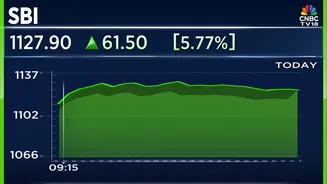
During early trade, banking and energy stocks largely led the gains on the Sensex, indicating a sectoral trend. Axis Bank Ltd. stood out as the top gainer, experiencing a rise of 2.64%. Other notable gainers included NTPC Ltd. (1.36%), Reliance Industries Ltd. (1.25%), and ITC Ltd. (1.25%), along with HDFC Bank Ltd. (1.21%). However, some stocks faced declines. Asian Paints Ltd. saw the sharpest fall, dropping 5.69%. Maruti Suzuki India Ltd. declined by 1.36%, HCL Technologies Ltd. slipped by 1.01%, and State Bank of India Ltd. and Kotak Mahindra Bank Ltd. also saw decreases of 0.49% and 0.46%, respectively. This data underscores the varied performance across different stocks and sectors, reflecting the complex dynamics at play within the market.