








Initiating Cervical Cancer Prevention
Maharashtra has embarked on an extensive campaign to protect adolescent girls from the human papillomavirus (HPV), a primary cause of cervical cancer.
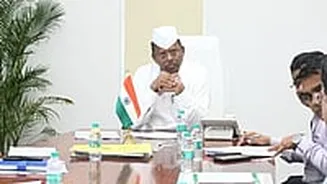
This significant public health initiative targets approximately 984,414 girls who are between 14 and 15 years old. The drive, which commenced on March 8th, is strategically planned to conclude within a three-month timeframe. Following this dedicated campaign, the HPV vaccination will be seamlessly integrated into the state's regular immunization schedule, ensuring long-term protection for future generations. The launch ceremony, held on International Women's Day at the Yashwantrao Chavan Centre in Mumbai, was graced by Deputy Chief Minister Eknath Shinde, underscoring the importance of this health measure for women across the state. This effort aligns with the broader national strategy to bolster cervical cancer prevention through accessible vaccination for adolescent girls.
Vaccine Procurement and Target Group
In preparation for this extensive vaccination effort, Maharashtra secured a substantial quantity of 947,380 doses of Gardasil 4. This specific vaccine is a quadrivalent formulation, designed to offer protection against four key strains of the HPV, notably including types 16 and 18. These particular strains are identified as being responsible for roughly 70 percent of cervical cancer cases globally, making the selection of Gardasil 4 a strategic choice for maximum impact. State health officials have meticulously compiled a comprehensive list of 984,414 eligible girls across Maharashtra. The age criterion is strictly maintained, focusing on those who are 14 years old and above but have not yet reached their 15th birthday, ensuring the vaccine is administered during the optimal window for effectiveness.
Commitment to Women's Health
Deputy Chief Minister Eknath Shinde, at the launch event, emphasized the critical need to prioritize women's health, noting that while women often juggle numerous responsibilities with remarkable efficiency, their personal well-being can sometimes take a backseat. He articulated that safeguarding women's health is a collective responsibility, extending beyond the purview of the Health Department to encompass society as a whole. Shinde expressed strong confidence that this vaccination drive would significantly contribute to shielding nearly 10 lakh girls in Maharashtra from the threat of cervical cancer. He further highlighted the importance of reinforcing initiatives like 'Aarogya Aapulya Dari' (Health at Your Doorstep) to enhance healthcare accessibility, particularly for women residing in rural and underserved regions of the state.
Strengthening Healthcare Infrastructure
Public Health and Family Welfare Minister Prakash Abitkar reaffirmed the state government's robust commitment to implementing the HPV vaccination program. He acknowledged the pivotal role of the Central government's initiative in making the vaccine available on a national scale, thereby facilitating its rollout in Maharashtra. Abitkar confirmed that health workers throughout the state have undergone specialized training to effectively administer the vaccine. Furthermore, he assured that alongside the immunization campaign, efforts will be intensified to strengthen cancer screening services. This dual approach, combining vaccination with screening, is considered essential for a comprehensive strategy against cervical cancer. Abitkar also urged for vigilance against the spread of misinformation regarding the HPV vaccine on social media, calling upon journalists and the public to actively disseminate accurate information.