




A Space Relic Returns
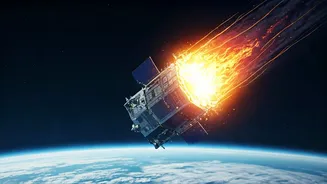
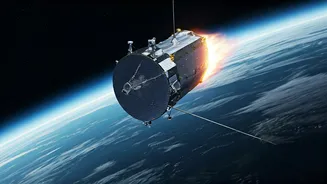
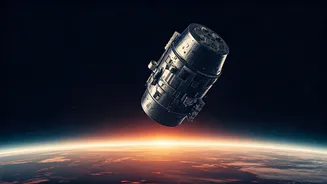
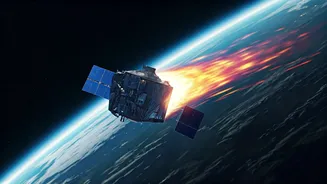
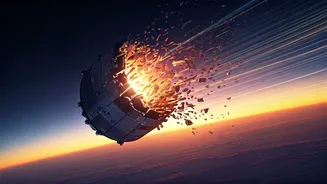
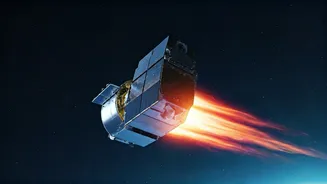
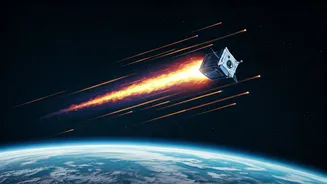
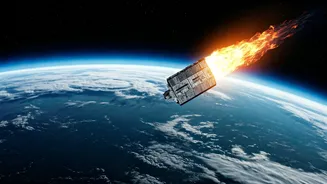
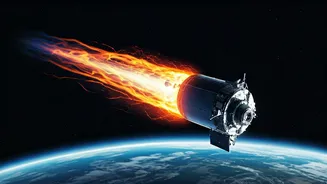
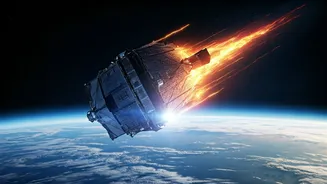
After a remarkable 14-year tenure in orbit, a significant piece of NASA's scientific endeavor, the Van Allen Probe A, is scheduled to make its re-entry
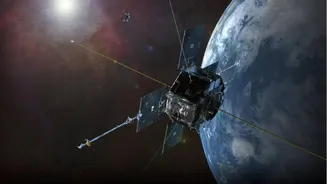
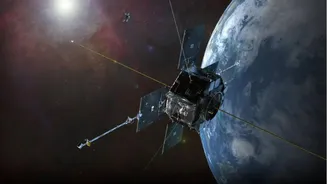
into Earth's atmosphere. Launched in August 2012 alongside its twin, Van Allen Probe B, this 600 kg (1,323-pound) spacecraft was specifically designed to investigate the enigmatic Van Allen radiation belts, crucial regions of charged particles encircling our planet. The probe ceased operations and was deactivated in 2019, marking the end of its active data collection period. Its eventual return to Earth is a testament to the longevity of space missions and the natural cycle of orbital decay, reminding us that even our most advanced creations eventually return to their origins.
Unraveling Earth's Shields
The Van Allen Probe A and its counterpart embarked on a mission, initially planned for just two years, to meticulously study the Van Allen belts. These doughnut-shaped zones, named after the pioneering scientist James Van Allen, are dynamic regions where high-energy particles are trapped by Earth's magnetic field. Their primary function is to act as a natural shield, safeguarding our planet from the hazardous effects of solar storms, cosmic radiation, and the relentless streams of charged particles emanating from the Sun, commonly known as the solar wind. For nearly seven years, these probes gathered invaluable data, significantly enhancing our understanding of these protective layers and their role in planetary defense.
The Solar Cycle's Impact
Initially, NASA analysts had projected the re-entry of Van Allen Probe A for around 2034. However, this forecast underwent a significant revision due to the natural fluctuations of the solar cycle. As the Sun approached its solar maximum in 2024, a period characterized by heightened activity, it triggered a series of space weather events. These energetic solar phenomena appear to have accelerated the orbital decay of the Van Allen Probe A, leading to its earlier-than-anticipated return to Earth. This unexpected acceleration highlights the dynamic and sometimes unpredictable nature of space weather and its influence on objects in orbit.
A Safe Return to Earth
NASA anticipates that the vast majority of the Van Allen Probe A will disintegrate and burn up completely as it traverses the dense layers of Earth's atmosphere. Nevertheless, projections from the US Space Force suggest that some components may survive this fiery re-entry. The probability of any individual experiencing harm from falling debris is exceptionally low, estimated at roughly 1 in 4,200. This low risk is further mitigated by the fact that approximately 70 percent of Earth's surface is covered by water. Therefore, any surviving fragments are overwhelmingly likely to land harmlessly in the ocean, posing minimal threat to life on land.
Brothers in Orbit
The Van Allen Probe A was not alone in its groundbreaking mission; it was launched alongside its identical twin, Van Allen Probe B. While Probe A is now returning, its sibling, Probe B, is also on a trajectory back to Earth, though its re-entry is expected at a later date, sometime before 2030. Both spacecraft were integral to a mission that far exceeded its original two-year scope, demonstrating the robustness of their design and the enduring scientific value of their findings. Their dual operation provided a comprehensive dataset, allowing scientists to study the Van Allen belts with unprecedented detail and clarity for almost seven years before their fuel reserves depleted, rendering them unable to maintain their orientation towards the sun and concluding their operational life.