





Celestial Dung Beetles
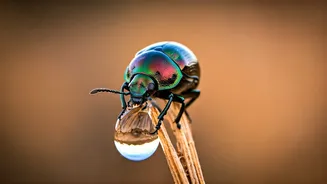
While many insects rely on visual cues on the ground, the African dung beetle exhibits an extraordinary navigational skill by looking upwards. These remarkable
creatures utilize the light from the Milky Way, employing it as a cosmic compass to guide them in a direct path. This celestial guidance is crucial for them to efficiently transport their valuable food source away from potential competitors and thieves, ensuring their survival and the continuation of their species. Their ability to read the stars is a testament to the sophisticated, often hidden, adaptations that exist in even the smallest of organisms within our natural world.
Pufferfish's Sand Art
Male white-spotted pufferfish are true artists of the ocean floor, meticulously crafting intricate designs to attract a mate. Over several days, they diligently use their fins to sculpt perfectly geometric circular patterns into the sand. These mesmerizing underwater "crop circles" serve a dual purpose: they function as a secure and attractive nesting site for potential offspring, and they represent a grand, high-effort display of commitment and dedication to a female. This elaborate behavior showcases an astonishing level of intention and artistry driven by reproductive instincts.
Bloody Lizard Defense
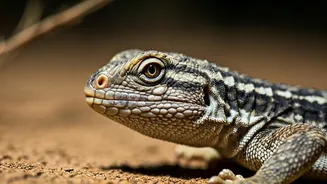
The Texas horned lizard possesses a rather gruesome yet effective defense mechanism when faced with imminent danger. In a startling display, it can dramatically increase the blood pressure within its head. This intense pressure causes the delicate blood vessels surrounding its eyes to rupture, unleashing a potent stream of foul-tasting blood directly at its attacker. This surprising and unpleasant projectile serves to deter predators, giving the lizard a crucial opportunity to escape or avoid further harm. It's a drastic measure that highlights the extreme lengths some animals will go to protect themselves.
Penguin Pebble Proposals
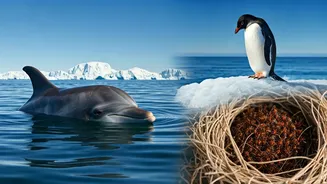
In the stark, icy landscapes of Antarctica, the Adelie penguin engages in a unique courtship ritual centered around a seemingly simple gift: pebbles. The male penguin actively seeks out the smoothest, most ideally shaped pebbles he can find, presenting them to a potential female mate as a form of proposal. If the female accepts this stony offering, it signifies her agreement, and the pair will then collaborate to use the pebble as a foundation for their shared nest. This behavior emphasizes the value placed on resources and partnership in their challenging environment.
Ants as Living Bombs
Certain species of ants native to Borneo have evolved an extraordinary and selfless defense strategy. These worker ants are capable of a voluntary self-destruction, essentially becoming "living bombs" when their colony faces a threat. In moments of crisis, they can rupture their own bodies, expelling a sticky and toxic yellow fluid. This potent spray acts as a powerful deterrent, immobilizing or repelling intruders and safeguarding the rest of the colony at the ultimate personal cost. This behavior is a profound example of altruism and the extreme measures taken for collective survival.
Lyrebird's Sonic Mimicry
The Australian lyrebird stands out as one of nature's most talented impressionists. While they primarily use their vocalizations to mimic other bird songs for attracting mates, their repertoire extends far beyond avian calls. These incredibly adept birds can flawlessly replicate a wide array of sounds from their surroundings. This includes the distinctive industrial whirring of chainsaws, the sharp clicks of camera shutters, and even the piercing alarms of cars echoing through the forest. Their ability to so accurately reproduce such diverse and artificial sounds is truly remarkable.
Sea Cucumber Evisceration
When confronted by a predator, certain species of sea cucumbers employ a highly unusual and "gutsy" escape tactic. They possess the remarkable ability to expel their internal organs through their posterior opening. This dramatic expulsion serves to entangle and distract the pursuing predator, providing the sea cucumber with a crucial window for escape. Remarkably, this self-mutilation is not fatal; the sea cucumber is able to survive the ordeal and subsequently regrow its lost internal structures, showcasing an incredible capacity for regeneration.
Crows' Death Investigations
Crows exhibit a fascinating behavior when they encounter a deceased member of their species. Upon discovering a fallen companion, they often emit a distinct "scold" call, which serves to gather other crows in the vicinity. This behavior is not simply an expression of grief; scientific observations suggest it's a strategic gathering aimed at investigating the circumstances of the death. By flocking together, they can collectively assess the situation and learn about potential dangers present in their environment, thereby enhancing their own survival prospects.
Naked Mole Rat Diet
In the complex social structure of a naked mole rat colony, reproduction is strictly controlled by a single breeding "queen." To encourage the other female rats to dedicate themselves to caring for the queen's offspring, she employs a peculiar feeding strategy. The queen provides her subordinate colony members with her own droppings. These feces contain specific hormones that act to "program" the non-breeding females, fostering strong maternal instincts and ensuring they become diligent and nurturing caretakers for the young.
Frogs Freeze Solid
To endure the harsh, freezing temperatures of Alaskan winters, wood frogs have evolved an extraordinary survival mechanism. These amphibians can effectively "freeze solid," allowing their heartbeat and breathing to cease entirely. Up to two-thirds of their body water can turn to ice. Come spring, as temperatures rise, they undergo a natural thawing process. Astonishingly, they reanimate and resume their normal activities, hopping away as if they had merely been in a deep slumber, showcasing an incredible resilience to extreme cold.