





Oily Scalp: Stress or Genetics?
Many believe an oily scalp signals high stress levels, pointing to increased cortisol. While stress can influence hormone fluctuations that might temporarily
affect oil production, it's rarely the sole or primary culprit. Dr. Shitij Goel, a Senior Consultant in Dermatology, explains that your scalp's oiliness is predominantly governed by genetic predisposition, the inherent activity of your sebaceous glands, and your personal hair care routines. Therefore, attributing excessive oiliness solely to stress is an oversimplification; it's a complex interplay of factors where genetics and hygiene often play a more significant role than acute stress responses.
Flaky Scalp: Gut Myth Debunked
The notion that a flaky scalp, often mistaken for dandruff, stems from an imbalanced gut microbiome is a common internet claim. However, dermatologists like Dr. Goel clarify that this link is largely misleading. The vast majority of cases involving a flaky scalp are attributable to common dermatological conditions such as dandruff or seborrheic dermatitis. These conditions are far more prevalent and directly related to scalp health rather than an internal gut imbalance, making the gut-health connection a rare explanation for this widespread issue.
Early Greying: Genes Predominate
While it's often suggested that premature greying of hair is a direct consequence of nutrient deficiencies, this claim holds only partial truth. According to Dr. Goel, the primary determinant of when your hair begins to turn grey is genetics. Although deficiencies in certain nutrients, such as Vitamin B12 or iron, can indeed contribute to early greying in some individuals, they are secondary factors. The inherent genetic programming for melanin production and distribution remains the most significant influence on your hair's colour trajectory.
Wider Parting: Beyond Insulin
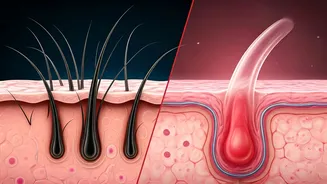
A widening hair parting is frequently linked online to hormonal issues or elevated insulin levels, with theories suggesting increased DHT. Dr. Goel clarifies that hair thinning, which often manifests as a wider parting, is a more intricate phenomenon. It is more commonly associated with androgen sensitivity and hormonal imbalances that lead to pattern hair loss, rather than being a direct indicator of insulin resistance or related metabolic problems. While hormonal factors are involved, the cause is often more complex than a single metabolic issue like insulin.
Weak Roots: Multiple Causes
The assertion that weak hair roots and increased hair fall directly point to low iron levels is one of the more plausible, yet still not definitive, claims. Dr. Goel notes that iron deficiency can indeed contribute to these symptoms. However, it's crucial to understand that numerous other factors can lead to weak roots and hair loss. These include elevated stress levels, suboptimal dietary intake, thyroid dysfunction, and various other physiological conditions. Therefore, while iron levels are a possibility, they are just one among several potential culprits.
Seeking Professional Advice
Dr. Goel strongly advises against self-diagnosing based on these perceived hair signs. Instead, he emphasizes that such symptoms should serve as prompts to seek professional medical evaluation. Hair changes can sometimes offer clues to underlying health conditions, but they are not diagnostic on their own. The internet often oversimplifies complex medical issues, making it vital to consult a healthcare professional for accurate assessment and appropriate treatment, rather than relying on unverified online checklists.