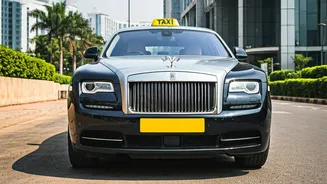

The Bengaluru Sighting
The occurrence of a Rolls-Royce, usually seen as a status symbol, functioning as a taxi in Bengaluru was a surprising event that made waves across the
city. Many were left with curiosity when the luxury car was seen with a yellow number plate. Such plates are mainly associated with commercial vehicles in India. The yellow plate instantly differentiates the vehicle from private vehicles which have white number plates. This incident sparked an immediate debate: was this a legitimate taxi service, or was there another explanation for the unique sighting?
Yellow Plate Explanation
In India, the use of yellow number plates is straightforward and regulated. These plates indicate that a vehicle is registered for commercial purposes. Any vehicle transporting passengers or goods for hire or reward is mandated to have this type of number plate. This regulation is to distinguish the commercial vehicles from those used privately. The color serves as a quick visual cue for law enforcement and the public, helping in the enforcement of traffic rules and commercial vehicle regulations. The presence of a yellow plate on the Rolls-Royce suggested its use in a commercial capacity.
Commercial Vehicle Uses
Commercial vehicles with yellow plates encompass a broad spectrum of services. Taxis, auto rickshaws, trucks, buses, and even rental cars are included in this category. The plates are an essential tool for authorities to monitor the usage of vehicles, ensuring they are correctly registered and insured for the purposes they serve. Yellow plates also signify the vehicles are subject to different rules and regulations compared to private vehicles, including specific tax structures and permit requirements. These ensure the vehicle's safe and compliant operation.
Legal & Regulatory Aspect
The usage of yellow number plates is rooted in India's Motor Vehicles Act. This legislation determines all guidelines for vehicles. Each vehicle must adhere to the rules that govern its category. Therefore, any vehicle using a yellow plate must fulfill commercial requirements. This includes having proper commercial insurance, valid permits to operate, and adherence to specific safety standards. If a vehicle doesn't comply, it could face penalties, including fines or vehicle impoundment. The regulations are designed to safeguard both the vehicle's users and other road users by ensuring appropriate safety and operational standards.
Rolls-Royce as Taxi?
Seeing a Rolls-Royce as a taxi in Bengaluru raised questions about the practicality and economics of the venture. Rolls-Royces are expensive vehicles, representing a significant investment and ongoing maintenance expenses. Their high purchase price, combined with elevated operational costs such as fuel and upkeep, calls into question their viability as conventional taxis. However, there might be unique commercial use cases for a Rolls-Royce in a city like Bengaluru, maybe for luxury airport transfers, special events, or high-end tourism. The novelty of the vehicle could also be a major draw for customers.
Possible Explanations
Multiple scenarios can explain the Rolls-Royce's yellow plate. It could be part of a high-end luxury car rental service, tailored to a wealthy clientele looking for exceptional experiences. Another possibility is its utilization for special event transport like weddings, corporate gatherings, or high-profile events where exclusivity and luxury are prioritized. Alternatively, it could be used for chauffeur services, catering to executives or visitors. These possibilities highlight the diverse nature of commercial vehicle usage and the potential for luxury vehicles to find their way into niche markets.
Impact & Perception
The sight of a Rolls-Royce with a yellow number plate impacted public perception. While many were surprised, others saw it as a sign of evolving business models and the demand for exclusive services. The event sparked discussions on the changing landscape of transportation and the willingness of companies to cater to niche markets. This also showed a trend toward adapting luxury assets for commercial use, reflecting a modern approach to wealth and the shifting preferences of affluent consumers. It highlighted the city's ability to support unique business models.
Conclusion: A Bengaluru Story
The incident of the Rolls-Royce taxi in Bengaluru is more than just a peculiar event. It highlights the dynamic changes of the transportation industry and the growing importance of catering to specialized markets. While the exact commercial use remains uncertain, the yellow number plate confirms its commercial registration, which opens up avenues for imaginative business models. This incident adds to Bengaluru’s reputation for adapting to change and showcasing innovation in unexpected ways. It also demonstrates how luxury vehicles might be integrated into everyday services, shaping the perception of luxury and commercial transport.