





Understanding the Core Disciplines
In today's rapidly advancing technological world, the lines between traditional engineering fields are blurring, leading to the emergence of interdisciplinary
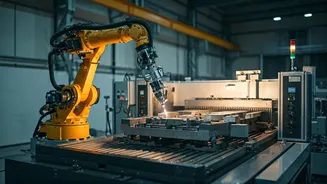
programs. Two such forward-thinking options are BTech in General Engineering and BTech in Engineering Science, designed to equip students with the adaptability and cross-domain knowledge needed for modern industries. While both move away from rigid specialization, they offer distinct educational philosophies. General Engineering focuses on practical, application-driven learning, providing a broad overview of various engineering fundamentals like mechanics, electronics, design, and thermodynamics, with later electives in areas such as robotics or energy systems. The aim is to produce engineers adept at integrating knowledge across disciplines for holistic problem-solving. In contrast, Engineering Science delves deeper into scientific and analytical training, blending core engineering concepts with strong foundations in advanced mathematics, computational modeling, and physics. This path cultivates critical thinking and scientific inquiry, preparing students for advanced research and innovation-focused careers in fields like data science, nanotechnology, or materials research. The fundamental difference lies in their emphasis: one prioritizes broad application and integration, the other emphasizes deep scientific understanding and analytical rigor.
Key Distinctions in Focus
Although both BTech General Engineering and BTech Engineering Science champion interdisciplinary learning, their orientations diverge significantly. General Engineering adopts a more hands-on, application-centric approach, delving broadly into various engineering disciplines to build a foundational understanding. This curriculum is geared towards developing practical engineering and system integration skills, allowing students to tackle real-world problems across multiple domains. Conversely, Engineering Science is rooted in a strong theoretical and scientific base, emphasizing advanced mathematics, physics, and sophisticated scientific modeling. Its curriculum is designed to foster deep analytical reasoning, computational prowess, and research-oriented capabilities. Consequently, while General Engineering equips graduates with the ability to design, implement, and manage interconnected systems, Engineering Science cultivates the analytical minds needed for innovation and scientific exploration. The specialization options also reflect this difference: General Engineering offers electives in applied areas, whereas Engineering Science provides specializations in cutting-edge scientific fields or advanced technological domains.
Career Trajectories Explored
The career paths diverging from BTech in General Engineering and BTech in Engineering Science are as distinct as the programs themselves. Graduates from General Engineering are well-positioned for a wide array of roles within manufacturing, automation, energy, product design, and industrial systems. Typical positions include Design Engineer, Robotics Engineer, Project Engineer, Industrial Engineer, and CAD/CAE Specialist. Their broad foundational knowledge allows for versatility, making them valuable assets in dynamic, multi-disciplinary teams and enabling them to transition across various functions and industries. On the other hand, BTech in Engineering Science graduates are sought after in cutting-edge technology sectors. Their analytical and conceptual strengths pave the way for roles such as Research Engineer, Computational Engineer, Data Scientist, AI Engineer, Semiconductor Engineer, and Nanotechnology Researcher. Companies in high-tech domains, including AI, semiconductor fabrication, defense organizations, and deep-tech startups, actively recruit these professionals for their advanced problem-solving and innovation capabilities.
Placement Prospects Detailed
Placement opportunities for BTech General Engineering graduates are robust across diverse sectors such as manufacturing, infrastructure, automation, sustainability, and consulting. Companies often recruit for roles in production management, system integration, design support, operations, and quality control. The adaptability inherent in their training makes them highly sought after by industries requiring versatile engineers who can contribute across different operational facets. For BTech Engineering Science graduates, placement success is particularly pronounced in high-technology fields like artificial intelligence, data science, semiconductor manufacturing, nanotechnology, and scientific computing. Students frequently secure positions involving algorithm development, advanced modeling, research support, and intricate electronics. Those possessing strong programming acumen and sharp analytical skills often command highly competitive offers, reflecting the demand for their specialized expertise in innovative and research-intensive environments.
Choosing Your Path Wisely
Deciding between BTech in General Engineering and BTech in Engineering Science hinges on individual strengths, learning preferences, and long-term aspirations. A BTech in General Engineering is an excellent choice for students who thrive in hands-on environments, enjoy exploring multiple engineering disciplines before potentially narrowing their focus, and are drawn to system-level problem-solving. This program is ideal for aspiring professionals aiming for roles in design, manufacturing, robotics, operations, or seeking broad industry flexibility. In contrast, BTech in Engineering Science is best suited for individuals with a strong aptitude for mathematics and physics, a passion for conceptual depth, modeling, and research, and an interest in emerging technologies like data science or semiconductors. It is a particularly strong foundation for those planning postgraduate studies or careers deeply rooted in research and innovation within high-tech, cutting-edge fields. Ultimately, the choice requires a careful consideration of one's academic inclinations and future career ambitions.