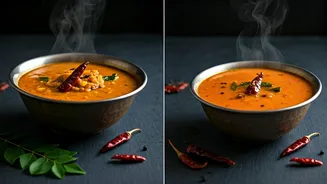







A Tale of Two Sambar Styles
The fervent online discussion ignited by a food delivery platform's playful jab at Bengaluru versus Chennai sambar highlights a deeper culinary truth:
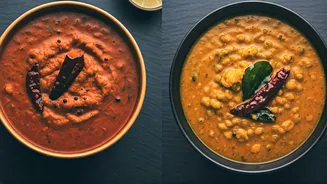
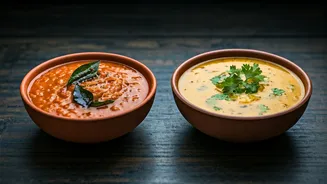
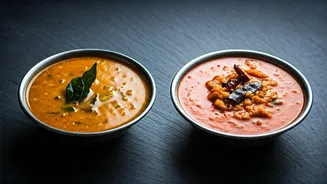
sambar is far from uniform across South India. This divergence isn't just a matter of opinion; it's deeply rooted in regional culinary traditions and how the dish integrates into daily meals. Chef Vinayak Shah explains that in Bengaluru and across Karnataka, sambar typically presents a slightly thicker consistency, often enhanced by a touch of sweetness from jaggery. This lends itself to being a perfect accompaniment for staples like idli, vada, and dosa, with its flavor profile designed to complement these textures. Conversely, in Chennai and the broader Tamil Nadu region, sambar leans towards a more fluid texture, characterized by a pronounced tanginess derived from tamarind and a more assertive spice blend. This style is frequently served as an integral part of a full meal, particularly with rice, necessitating a flavor balance adjusted to harmonize with the entire spread.
The Art of Flavor Nuances
Delving deeper into what sets these two sambar varieties apart reveals a fascinating interplay of ingredients and preparation techniques. Food historian Pushpesh Pant traces the origins of sambar to a legendary royal kitchen, suggesting that its evolution is tied to the available ingredients and the preferences of the ruling palate. While Chennai's sambar is known for its spicier and more tart flavor, largely due to the generous use of tamarind and often featuring a single prominent vegetable like drumstick, brinjal, or pumpkin, Bengaluru's version offers a milder, sweeter, and more aromatic experience. This is often achieved through the inclusion of jaggery and a more diverse medley of vegetables. Pant further notes that Bengaluru sambar frequently incorporates freshly ground pastes for added depth, moving beyond just a dry spice powder. Executive Chef Mohammed Eliyaz from Conrad Bengaluru views these as two distinct yet equally valid expressions of the same dish. He describes Bengaluru sambar as 'rounded and comforting' with its layered sweetness and aroma from freshly ground masala, contrasting it with Chennai sambar's 'direct and assertive' character, which derives its sharp, pronounced flavor from tamarind and sambar powder. Pant also points out that while Tamil sambar has variations, it often excludes onion and prominently features asafoetida, with Bengaluru sambar showing a closer inclination to the sweeter Udupi culinary style.
Regional Palates & Culinary Philosophy
The subtle yet significant differences between Bengaluru and Chennai sambar are not accidental; they are a testament to the influence of regional cooking practices, local taste preferences, and the dish's specific role within the meal structure. Chef Eliyaz elaborates on this, stating that in Bengaluru, the construction of flavor is a layered process, with freshly ground masalas building aromatic depth and contributing to a rich, almost velvety body. This meticulous layering results in a complex, symphonic taste experience. In stark contrast, Chennai's approach emphasizes precision and restraint. The careful metering of sambar powder and the opportune addition of tamarind craft a cleaner, sharper, and more defined flavor profile. This disciplined approach creates an elegant composition that, while distinct, shares the same foundational roots. Food blogger Shubham Parikh echoes this sentiment, noting that while the differences might not be immediately obvious to a casual observer, a regular consumption of both styles reveals a progression in flavor, texture, and even aftertaste. The core of the dish remains the same, but its final manifestation is sculpted by the daily habits and ingrained palates of the people who grow up with it, making each regional variation a unique culinary narrative.