





Understanding Vastu Shanti
Vastu Shanti Hawan is a traditional Hindu ceremony designed to cleanse and purify a space, whether it's a home, office, or any other structure. The practice
aims to eliminate negative energies and imbalances, inviting positive vibrations and harmony. It is believed to appease the Vastu Purusha, the deity of architecture and dwelling, ensuring that the living environment is conducive to well-being, prosperity, and peace. This process often involves the performance of specific rituals, the chanting of mantras, and the offering of oblations to the sacred fire, all carefully orchestrated to rectify any architectural or environmental imperfections, thereby restoring balance to the space.
Purpose of the Ritual
The primary purpose behind performing Vastu Shanti Hawan is to rectify any Vastu doshas (architectural flaws) present in a building or surrounding environment. These flaws can lead to various problems, including health issues, financial difficulties, and relationship strains. By conducting the Hawan, practitioners seek to mitigate these negative effects and create a positive atmosphere. It's believed that the fire acts as a purifier, consuming negative energies and transforming them into positive ones. The mantras chanted during the ritual invite blessings from various deities, further enhancing the purifying effect and instilling peace, happiness, and prosperity for the residents. Ultimately, Vastu Shanti Hawan aims to create an environment where individuals can thrive both physically and spiritually.
Step-by-Step Rituals
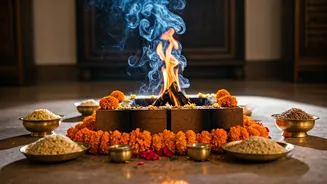
The Vastu Shanti Hawan involves a series of meticulously planned steps. It usually begins with the preparation of the Hawan Kund (fire pit), which is often decorated with specific symbols and materials. The ritual includes the lighting of the sacred fire, followed by the chanting of mantras dedicated to various deities associated with Vastu Shastra. Offerings like ghee, herbs, grains, and other sacred substances are added to the fire, symbolizing devotion and purification. The priests or the person performing the ritual typically performs the 'ahuti,' offering specific items while reciting the mantras. The rituals often conclude with a final prayer and the distribution of prasad (blessed food). Each step is carefully executed to ensure that the environment is cleansed and filled with positive energy. The entire process is intended to usher in an era of prosperity and well-being for all involved.
Photographic Illustrations
Visuals play an important part in understanding the Vastu Shanti Hawan. Photographs of the Hawan Kund, decorated with colorful patterns and symbols, demonstrate the careful preparation. Images capture the priest performing the 'ahuti,' showing the offerings and the flame of the sacred fire. These visuals not only aid in understanding the steps of the ritual but also convey the atmosphere of solemnity and devotion that surrounds the event. The presence of families and other individuals participating in the Hawan can be observed. These images give the readers a glimpse into the ritual and offer a more profound connection to the subject, facilitating a better comprehension of the practice and its practical execution.
Post-Hawan Significance
After the completion of the Vastu Shanti Hawan, it is believed that the space has been purified and blessed. It is considered auspicious to then spread the ashes from the Hawan around the property or home to maintain the positive energy generated during the ritual. Residents often experience a sense of peace and a renewed sense of well-being after participating in or witnessing the ceremony. The post-Hawan period is often characterized by an increased feeling of harmony within the household, leading to better relationships and greater prosperity. It is considered to be a fresh beginning, inviting auspiciousness and a peaceful environment. Maintaining this positive energy requires ongoing efforts, including proper upkeep of the living space and the practice of positive habits.