





The Illusion of Ease
The concept of 'effortless' style in fashion often misleads, suggesting a lack of exertion when it truly signifies the skillful hiding of effort. Achieving
a look that is both relaxed and undeniably stylish demands meticulous attention to detail, including how garments fit, their proportions, and the surrounding context. It's about understanding and employing the 'right kind' of looseness, a nuanced approach rather than sheer abandon. This idea is particularly relevant when observing the recent global trend towards looser silhouettes and casual attire, which is frequently lauded as innovative and a refreshing departure from more structured aesthetics. However, this validation often overlooks similar modes of dress that arise from necessity rather than curated design, leading to a double standard where the same clothing can be perceived as fashionable in one instance and simply unkempt in another.
Everyday India's Style
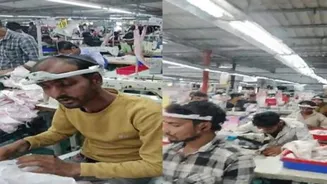
Observing daily life across India reveals a clear distinction in how relaxed dressing is perceived. Consider the delivery personnel navigating bustling city streets, their loose-fitting shirts chosen primarily for comfort in the heat and ease of movement, not as a fashion statement. Similarly, a college student in a smaller city might repeatedly wear a slightly oversized button-down shirt for various occasions – from classes to commuting to social outings – as a practical approach to wardrobe management. For years, such practical choices were often viewed as merely informal, or even careless, lacking any aesthetic merit. This contrasts sharply with the current urban fashion trend, which champions oversized shirts worn open over tees, intentionally rumpled textures, and relaxed fits combined with tailored pieces. What was once seen as a lack of effort is now reframed as a sign of sophisticated ease, but only when it is deliberately styled, contextualized, and, critically, endorsed by fashion authorities.
Flannel: A Case Study
The widespread return of the flannel shirt to global fashion this year exemplifies this shift. While its origins in workwear and 1990s grunge lend it an air of authenticity, its contemporary styling is far from spontaneous. Today, flannel is often paired with tailored trousers, layered with deliberate precision, and presented within a carefully controlled visual narrative. This presentation communicates a clear message: casualness is desirable, but only when it is meticulously constructed and deliberately displayed. The idea of 'effortless dressing' thus becomes a revealing lens. It is not about the absence of effort but the artful concealment of it. To appear relaxed while still being recognized as stylish necessitates a careful calibration of fit, proportion, and context, requiring a specific type of looseness that has been validated by the prevailing fashion discourse. This suggests that ease is perceived differently depending on whether it stems from deliberate choice, brand association, and curated styling, or from practical constraints like climate, affordability, and the need for versatile clothing.
Perception and Hierarchy
The true differentiator between accepted ease and rejected informality often lies not in the garment itself, but in the circumstances under which it is worn. When relaxed silhouettes are accompanied by visible indicators of intentional choice – such as brand affiliation, thoughtful styling, or a particular setting – they are readily interpreted as fashionable. Conversely, when such looseness arises from necessity, stemming from environmental conditions, financial limitations, or the need for clothing to serve multiple purposes, it frequently loses its perceived aesthetic value. This distinction carries significant implications, as fashion plays a role in reinforcing social hierarchies. It dictates which ways of dressing are deemed aspirational and which are rendered invisible or inadequate, often obscuring the fact that many styles now presented as novel have existed for a long time outside the usual sources of fashion inspiration. In India, the constant negotiation between comfort and societal expectations has always been central to everyday dressing. The climate necessitates breathable fabrics, and mobility demands adaptable clothing. Garments are often worn across various situations and adapted rather than replaced. What is currently being hailed as a move towards relaxed dressing is, in many respects, a formal acknowledgment of practices that have long been in use but have historically gone unrecognized.
Redefining Control in Style
The resurgence of flannel, therefore, is more than just a garment making a comeback; it signifies a broader reevaluation of how effort is perceived and performed. After a period of excess and overt displays, there is a growing appreciation for subtlety, for clothing that doesn't appear to be trying too hard. However, this perceived subtlety is not neutral; it operates within established codes that determine when a relaxed appearance is considered credible and when it is dismissed. Ultimately, the real transformation occurring in fashion is not simply a move towards more casual wear, but a redefinition of control. To project an effortless image today requires not the abandonment of effort, but its selective display and strategic concealment. This moment in fashion ultimately underscores a crucial point: style is not inherently becoming more relaxed; it is becoming more selective about who is permitted to present themselves in such a manner.