

Welfare Schemes' Appeal
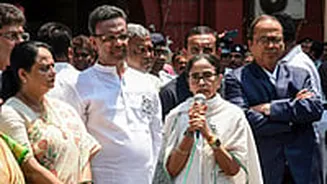
Mamata Banerjee's Trinamool Congress (TMC) has consistently leveraged direct cash transfer schemes, notably 'Lakshmir Bhandar,' to win over women voters
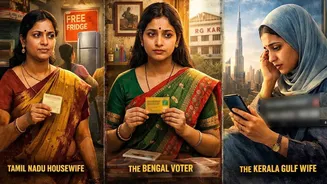
in West Bengal, a demographic that forms nearly half of the state's electorate and has been instrumental in her past political triumphs. This time, the party has even increased the monthly payout under Lakshmir Bhandar to Rs 1,500, a move designed to further endear them to the beneficiaries. While these schemes are generally welcomed by women, a significant sentiment is emerging that they do not fully address the broader economic needs. Many women report that while the financial assistance is appreciated, it often falls short of what is required for a sustainable livelihood, especially as they increasingly become the primary breadwinners in their households. This situation is exacerbated by the limited availability of formal employment opportunities within the state, leading to a reliance on these welfare payments that, by themselves, are not always perceived as transformative empowerment.
The 'Chaakri' Challenge
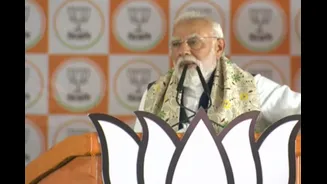
The Bharatiya Janata Party (BJP) is strategically positioning itself to capitalize on the economic anxieties prevalent among women voters. Their campaign is centered around the promise of 'chaakri,' which translates to employment, aiming to attract those who feel that welfare schemes alone are insufficient. The BJP advocates for a 'double-engine sarkar,' suggesting that their governance at both the state and central levels would foster an environment conducive to industrial growth and job creation. This narrative directly challenges the TMC's reliance on welfare, proposing a more direct route to empowerment through secure and stable employment. The appeal lies in offering a tangible solution to the job scarcity that many households are facing, aiming to present a more comprehensive vision of progress and self-sufficiency for women.
Safety Concerns Rise
Beyond economic issues, the BJP is also intensely focusing on the issue of women's safety as a critical election determinant. The party has been actively highlighting incidents from various parts of the state, such as Sandeshkhali, RG Kar, and Park Street, to portray a narrative that women are not adequately protected, even under a female chief minister. They allege that certain TMC leaders pose a threat to women and are reportedly shielded by Mamata Banerjee. This campaign aims to tap into the fears and insecurities of women, suggesting that a change in leadership is necessary to ensure their security and well-being. The persistent atmosphere of fear, particularly in areas like Sandeshkhali, where residents remain hesitant to speak out openly due to potential repercussions, is being used by the BJP to argue that 'Lakshmis' are not safe in Banerjee's Bengal, potentially influencing a significant segment of the electorate.
Strategic Campaign Narratives
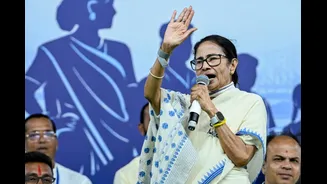
Both major parties are employing distinct narrative strategies to appeal to women voters. The TMC is banking on Mamata Banerjee's image as a resilient leader, often portrayed in campaign materials as a 'tigress' taking on the BJP, a narrative that proved effective in previous elections. This projection aims to evoke a sense of strong leadership and protective maternalism. Conversely, the BJP appears to have refined its approach, largely eschewing direct personal attacks on Banerjee. Instead, their focus is on core issues like job creation and women's safety. They are also making efforts to shed the 'outsider' label that the TMC successfully used against them in the past, by ensuring their national leadership is less prominent in their campaign, aiming for a more localized and relatable presence. The ultimate question remains whether the welfare promises or the prospects of employment and enhanced safety will ultimately sway the 'Lakshmis' of Bengal.