







Budgetary Oversight Explained
The non-allocation of funds for the Chabahar port project within the 2026 budget signifies a notable shift in India's fiscal approach. The government's
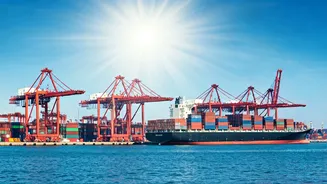
decision to exclude this project from the budget raises several questions concerning India's strategic priorities. The Chabahar port project, a vital initiative aimed at enhancing connectivity and trade with Afghanistan and Central Asia, has been a key component of India's regional strategy. Its absence in the budgetary provisions suggests a potential reevaluation of the project's timeline, scope, or strategic importance. The budget's focus and allocation of resources reveal the government's current priorities, and the exclusion of Chabahar underscores the complexities in the Middle East. The omission may also reflect external pressures, geopolitical dynamics, or a reassessment of the project's viability amidst the ongoing regional instability. This development could lead to delays or potential scaling back of the project, affecting India's ambitions in the region.
Middle East Tensions Impact
The backdrop of growing tensions in the Middle East significantly influences the budgetary decision concerning the Chabahar port project. The region has witnessed increased geopolitical instability, including conflicts, proxy wars, and shifting alliances, which impacts trade and infrastructure projects. The escalating tensions could have led the government to reassess the strategic risks associated with the project. The project's location makes it particularly vulnerable to any regional instability, thus complicating the logistics and potentially jeopardizing the safety of personnel and assets. Furthermore, the evolving geopolitical landscape necessitates constant evaluation of the project's feasibility. This reassessment might have included evaluating potential threats, security concerns, and the project's ability to navigate volatile regional dynamics. The uncertainty surrounding the Middle East may have contributed to a more cautious approach to funding significant infrastructure initiatives in the region.
Project's Strategic Significance
The Chabahar port project holds considerable strategic significance for India's regional ambitions. The port provides India with an alternative route to Afghanistan and Central Asia, circumventing Pakistan and reducing India's dependency on the sea routes that pass through Pakistan. This strategic advantage enables India to enhance trade, improve connectivity, and expand its influence in Central Asia. The port is critical for India's efforts to develop the International North-South Transport Corridor (INSTC), which aims to create a multimodal transport route connecting India with Russia and Europe. The project's absence from the 2026 budget raises concerns about India's commitment to these strategic goals. This decision suggests a potential shift in priorities or a reevaluation of the project's immediate importance. It also suggests India may be focusing its efforts and resources towards projects that could contribute directly to national interests and strategic alliances, and away from projects that encounter multiple geopolitical obstacles.
Future Implications Unveiled
The non-allocation of funds for the Chabahar port project has far-reaching implications for India's regional strategy and its relations with key stakeholders. The project's future now faces uncertainty, possibly impacting the timelines and scope of its development. This could impact India's efforts to enhance connectivity with Afghanistan and Central Asia, which can create delays in trade and infrastructure projects. The absence of funding could also influence India's relations with Iran, which is the host country for the Chabahar port. The decision may strain bilateral relations and could also influence Iran's perspective on India's commitment to strategic partnerships. Furthermore, the exclusion might signal a shift towards projects with more immediate, quantifiable benefits. Ultimately, this budgetary decision could reshape India's strategic approach toward regional infrastructure projects in the Middle East.