







Howrah Bridge: Kolkata's Pride
The Howrah Bridge, standing proudly in Kolkata, West Bengal, is a colossal cantilever bridge, a symbol synonymous with the city. Its construction and design
were a groundbreaking achievement during its time, allowing it to withstand extreme weather conditions and vast amounts of traffic. The bridge's importance is not only in its connection between the city and Howrah, but it also stands as a cultural monument, seen daily by millions. The Howrah Bridge also holds the distinction of being one of the busiest bridges globally, serving as a vital link for commuters, vehicles, and the lifeline of Kolkata's daily activities. It has a rich history with deep ties to the culture of West Bengal, making it more than just a bridge, but an enduring symbol of progress and identity for the region.
Dibang River Bridge: Arunachal's Span
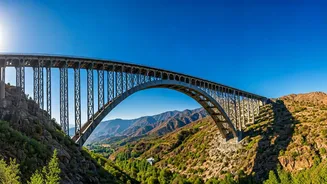
The Dibang River Bridge is located in Arunachal Pradesh, and represents an amazing feat of engineering as it crosses over the Dibang River. Serving as a crucial link, this bridge is extremely vital for improving transportation, boosting connectivity, and fostering economic development in this northeastern region. Designed to endure the diverse climatic conditions and the strength of the river's flow, it reflects the commitment towards infrastructural growth and provides a safer and more dependable means of travel, especially in an area with a difficult terrain. It greatly cuts down travel times and helps in the seamless movement of goods and people, improving lives in the process.
Lakshman Jhula: Uttarakhand's Charm
Lakshman Jhula in Uttarakhand is more than simply a suspension bridge over the River Ganga; it also stands as a spiritual and cultural landmark. It has a beautiful setting amidst the picturesque landscape and is connected to the city of Rishikesh. It is highly valued for its scenic beauty, drawing in a large number of visitors and devotees. Its design and construction reflect both local building practices and the need to deal with the area's particular geographical challenges. Lakshman Jhula is a popular spot for pilgrims and tourists as they travel to and from various temples and ashrams, thereby fostering a blend of faith and natural beauty within a lively and thriving setting.
Bogibeel Bridge: Assam's Lifeline
The Bogibeel Bridge in Assam, which extends across the Brahmaputra River, is a dual-gauge rail-cum-road bridge. This design is crucial because it significantly boosts connectivity by linking the districts of Dhemaji and Dibrugarh, thereby easing transportation and travel for locals. It facilitates the movement of both passengers and goods, thus boosting economic and social interactions within the area. The bridge's strategic location, near the border with China, is also crucial for defense and military operations. Bogibeel Bridge is not only an example of engineering, it is also essential in the overall growth of Northeast India.
Bandra-Worli Sea Link
The Bandra-Worli Sea Link, set in Maharashtra, is a magnificent cable-stayed bridge. It connects the suburbs of Bandra and Worli in Mumbai, drastically reducing travel times and relieving traffic congestion in this busy metropolis. The architecture of the bridge showcases modern engineering, and it provides breathtaking views of the Arabian Sea. It’s an essential part of the city’s infrastructure, easing commutes for commuters and boosting economic activities. It is also an attraction for those who are fond of driving, providing them a unique and spectacular driving experience. This bridge serves as a symbol of Mumbai's growth and infrastructure advancements.
Chenab Rail Bridge
The Chenab Rail Bridge, constructed in Jammu and Kashmir, is a monumental engineering feat. Known for being one of the world's highest railway bridges, it spans the Chenab River, thereby connecting the rugged terrain of the region. The bridge's construction posed extreme challenges, making it a true test of engineering, and it was created to withstand high wind speeds and seismic activity. This bridge has significantly improved accessibility to remote areas, bringing much-needed connectivity. It is a striking example of innovation and resilience, offering breathtaking views and representing a substantial step forward in infrastructure development for the area, enhancing connectivity and promoting regional development.
Gandhi Setu: Bihar's Legacy
In Bihar, the Gandhi Setu spans the Ganges River and acts as a significant link, connecting the northern and southern parts of the state's capital, Patna. It is an impressive example of infrastructural development because it is one of the longest river bridges in India. The bridge offers an important connection for people and vehicles, simplifying travel and promoting trade across the area. Through its construction, it had a notable impact on the economy, and its existence is essential for the region's overall development. The Gandhi Setu is a crucial component of Bihar's transport network, facilitating trade and social connections.
Pamban Bridge: Tamil Nadu's Link
The Pamban Bridge in Tamil Nadu connects mainland India to Rameswaram Island, standing as a testament to engineering as it navigates the challenging seas. It's a key railway bridge that helps connect the island to the mainland. The bridge's strategic importance comes from its role in facilitating easy movement between the mainland and the island, boosting tourism and trade in the area. The original bridge, built in the early 20th century, has a long history and has been a lifeline for locals. Its existence plays an integral role in maintaining ties between mainland India and Rameswaram, fostering economic and social connections.