





A European Giant
When discussing monumental governmental edifices, minds often drift to grand structures in prominent capitals like Washington D.C. or New Delhi. However,
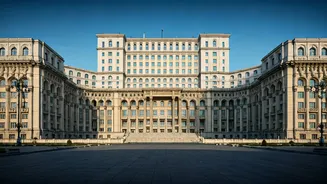
the undisputed champion in terms of sheer administrative function and colossal scale is none other than Romania's Palace of the Parliament, situated majestically in the heart of Bucharest. This imposing building is not merely a parliament; it's a landmark recognized globally for its immense dimensions and is frequently cited as one of the heaviest structures ever erected by humankind. Originally conceived and commissioned by the country's former communist leader, Nicolae Ceaușescu, back in 1984, the building was then known as the "House of the Republic." Today, it serves as the vibrant hub for the Romanian Parliament, accommodating both its Chamber of Deputies and the Senate. Beyond its primary legislative roles, the palace also generously hosts various museums and crucial conference facilities, cementing its status as a multifaceted national treasure and a testament to ambitious architectural endeavors.
Staggering Dimensions Revealed
The sheer physical magnitude of the Palace of the Parliament is almost beyond comprehension. Spanning an impressive area of approximately 365,000 square metres, which translates to about 3.9 million square feet, its footprint is vast. The structure impressively boasts 12 levels that rise above the ground, complemented by an additional 8 underground levels. Notably, one of these subterranean levels houses a purpose-built nuclear bunker, underscoring the immense scale of its design. Inside, the palace is a labyrinth of approximately 1,100 rooms, with a usable floor space exceeding 200,000 square metres. This extensive internal volume and administrative capacity firmly establish it as the largest parliament building globally and indeed one of the most significant buildings of any kind in the world, a true monument to architectural ambition on an unprecedented scale.
Unmatched Weight on Earth
Often cited as the heaviest building on the entire planet, the Palace of the Parliament carries an estimated weight exceeding 4 million tonnes. This extraordinary mass is a direct consequence of the lavish and extensive use of premium materials sourced exclusively from within Romania. A staggering 1 million cubic metres of exquisite Romanian marble were employed in its construction, alongside over 3,500 tonnes of crystal used for its magnificent chandeliers. The building also features colossal steel and bronze doors, intricately detailed solid wood interiors, and numerous other heavy components. The commitment to utilizing indigenous materials not only speaks to national pride but also significantly contributed to the immense gravitational pull of this architectural titan, making its foundation a marvel of engineering and resourcefulness.
Costly Foundations Laid
The construction of this monumental palace was an undertaking that began in 1984 and continued relentlessly, even amidst a period of severe economic hardship and austerity for the Romanian populace. To clear the vast expanse required for this project, approximately 7 square kilometres of central Bucharest were systematically razed. This demolition involved the displacement of thousands of homes, the relocation or outright destruction of dozens of historic churches and significant heritage buildings, and the uprooting of roughly 40,000 individuals from their residences. Tens of thousands of workers toiled tirelessly in round-the-clock shifts to bring Ceaușescu's vision to fruition. Pinpointing the exact financial toll is challenging, but estimates in today's currency consistently run into the billions of pounds, highlighting the immense human and economic sacrifices made for its creation.
Power, Excess, and Legacy
Nicolae Ceaușescu envisioned the Palace of the Parliament as the crowning jewel of a grand new civic district, intended to project an image of Romania's unwavering strength and autonomous standing. However, the sheer extravagance and overwhelming scale of the construction project rapidly transformed it into a potent symbol of the regime's opulent excess. This occurred at a time when ordinary Romanian citizens were grappling with severe food shortages, frequent electricity blackouts, and widespread economic struggles. The former leader was ultimately overthrown and executed in December 1989, during the Romanian Revolution. Following these dramatic events, the imposing structure was eventually repurposed to serve the needs of a democratic government, its grand halls now echoing with legislative debates rather than authoritarian pronouncements.
Global Architectural Comparison
While buildings like India's contemporary Parliament structure in New Delhi and the iconic United States Capitol in Washington, D.C., are undeniably significant architectural achievements, they do not rival the Romanian Palace of the Parliament in sheer overall size. The Romanian edifice remains unparalleled in its extensive administrative floor space, its vast volume, and its formidable weight. It stands as a profound architectural statement, eloquently illustrating how grand structures can serve as powerful reflections of political aspirations, ambitions, and, at times, extreme excess. The contrast with other notable parliamentary buildings underscores its unique standing in the global architectural landscape.
Democracy's New Home
Despite its contentious origins and the significant societal cost associated with its construction, the Palace of the Parliament now proudly functions as the official seat of Romania's democratically elected Parliament. Beyond its primary legislative duties, the building is a dynamic space that also accommodates the National Museum of Contemporary Art, hosts international summits in its state-of-the-art conference halls, and offers guided tours that attract hundreds of thousands of visitors annually. This transformation from a symbol of authoritarian power to a vibrant center of democratic governance mirrors the dramatic shifts in Romania's modern history. The Palace, therefore, represents more than just immense architectural scale; it embodies a nation's journey through ideology, ambition, and the enduring, often high, cost of monumental historical projects.