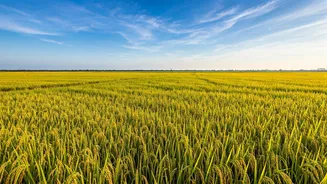








Surging Rice Production
India has recently witnessed a noteworthy increase in its rice production. This surge is due to a combination of factors, including advances in agricultural
technology, improved irrigation systems, and favorable weather conditions. Farmers have been adopting high-yielding varieties of rice seeds, which have contributed to higher yields per hectare. Government policies, such as subsidies on fertilizers and irrigation, have also played a crucial role in boosting production. The use of more efficient farming practices, coupled with the availability of credit and market access, has empowered farmers to increase their output. This upward trend in rice production has significant implications for both the national economy and food availability within the country.
Food Security Considerations
While the rise in rice production initially seems like good news for food security, there are potential drawbacks to consider. An oversupply of rice could lead to lower market prices, which might negatively affect farmers' incomes. Over-reliance on a single crop, like rice, could make the food system vulnerable to climate change or pest outbreaks. Furthermore, large-scale rice cultivation requires significant water resources, especially in areas with limited rainfall, potentially leading to water scarcity. It is imperative to monitor rice production levels and ensure a balanced approach that takes into account the needs of both farmers and consumers. Policies that promote crop diversification and efficient water usage are essential for maintaining long-term food security.
Sustainability Challenges
The surge in rice production raises important questions about environmental sustainability. Rice cultivation is water-intensive, and the over-extraction of groundwater can lead to depletion of aquifers, land subsidence, and ecological damage. Excessive use of chemical fertilizers and pesticides can pollute soil and water bodies, affecting human health and biodiversity. Moreover, rice farming contributes to greenhouse gas emissions, particularly methane, which contributes to climate change. Sustainable farming practices, such as water-efficient irrigation methods (e.g., drip irrigation), the use of organic fertilizers, and integrated pest management, are crucial for minimizing the environmental footprint of rice production. Encouraging these practices through incentives and awareness campaigns is essential for ensuring that rice production is ecologically sound.
Future Outlook and Solutions
Looking ahead, India must adopt a multi-faceted approach to address the challenges associated with the surge in rice production. Policymakers should focus on promoting crop diversification to reduce dependence on rice and mitigate the risks associated with monoculture farming. Investments in research and development can help create climate-resilient rice varieties and sustainable farming techniques. Implementing stricter environmental regulations and providing incentives for sustainable practices are necessary steps. Public awareness campaigns can educate farmers and consumers about the importance of responsible agriculture. By adopting these measures, India can ensure that its rice production continues to support food security while safeguarding the environment for future generations. A balance between production and sustainability will be the key to long-term success.