
Water: The Lifeline
Water is arguably the most crucial element for survival in any situation. Bear Grylls stresses the importance of securing a water source as a top priority.
He emphasizes collecting rainwater whenever possible using a tarp or large leaves. If you have access to a stream or river, purification is essential. This can be achieved through boiling the water for at least one minute to eliminate harmful pathogens. Another method includes creating a makeshift filter using layers of cloth and charcoal, a process that helps to remove impurities and sediment. Beyond the jungle, the principle of planning for potential shortages can apply to various aspects of life. It could be about saving money, having emergency supplies at home, or even managing your time effectively, ensuring you have the resources needed to overcome unexpected obstacles.
Ignite the Flames
Fire is more than just warmth; it's vital for cooking food, purifying water, and signaling for help. Grylls always stresses the importance of fire-starting skills in his survival guides. He teaches various methods, including using a fire starter, creating friction with a bow drill, or utilizing the sun with a magnifying glass. The key is to gather dry tinder like leaves or birch bark to catch a spark, then gradually add larger pieces of wood to build a sustainable flame. This isn't just a jungle technique; the concept applies to modern problem-solving. It teaches the value of finding different ways to overcome a challenge, starting small, and building momentum. The process can be linked to starting a project, igniting a new habit, or overcoming any initial hurdles with creativity and persistence.
Shelter: Build Refuge
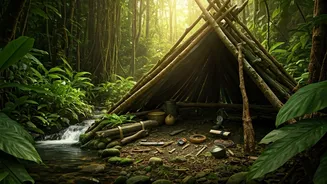
A basic shelter can protect you from the elements, providing a safe haven from rain, wind, and extreme temperatures. Bear Grylls often demonstrates how to construct simple shelters using natural materials found in the environment. He shows how to find a suitable location, considering factors like wind direction and available resources. Constructing a lean-to with branches and leaves is a common approach, or building a debris hut. These are usually designed to trap heat and offer a degree of comfort. This lesson extends beyond the jungle; it relates to our need for security and preparedness in everyday life. For instance, creating a comfortable workspace, organizing your finances to ensure stability, or designing a strategy to deal with stress. They all serve the purpose of establishing a safe space in the face of uncertainty.
Navigation: Finding Direction
Getting lost can quickly turn a survival situation into a disaster. Grylls often emphasizes the importance of knowing how to navigate using a compass, the sun, and the stars. He shows how to use the position of the sun during the day, observing the movement of the stars at night, and recognizing natural landmarks to find your way. It is essential to develop a basic understanding of map reading. This includes identifying key features and using the landscape to your advantage. Beyond the wilderness, the ability to find your way reflects our ability to set goals and stay on track in life. It involves planning your direction, recognizing milestones, and making adjustments when needed to reach your objectives. This can be connected to pursuing a career, completing a project, or even improving one's mental and physical health.
Food: Sustaining Life
Finding food is crucial for survival. Grylls advises on several methods of acquiring food in the wild. This includes foraging for edible plants, trapping small animals, or fishing. He stresses the need to identify plants and sources carefully to avoid poisoning, and the importance of cooking food to eliminate potential parasites. Always prioritize safety first. In addition to knowing what to eat, it is crucial to understand which foods to avoid. This also translates to making wise choices in life. This includes consuming nutritious foods for health, spending time with people who support you, and avoiding activities that could put you in danger. It teaches the importance of being aware of the available resources, assessing risks, and making the best of what is at hand, much like managing your finances or career.