





Deal Unveiled: Tariffs Reduced
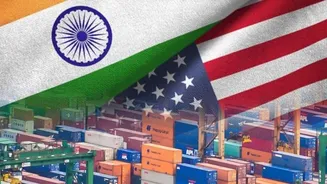
The United States and India have successfully concluded a significant trade agreement, marking a pivotal moment in their bilateral economic relationship.
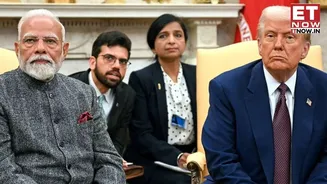
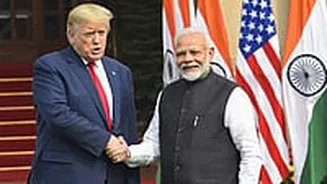
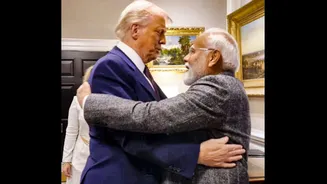
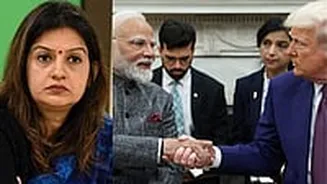
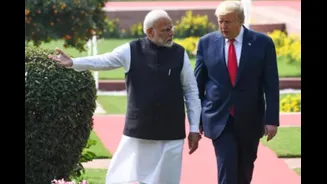
A key outcome of this accord is the immediate reduction of reciprocal tariffs imposed by the US on Indian goods, bringing them down from a previous level of 25 percent to 18 percent. This adjustment, announced by US President Donald Trump following discussions with Prime Minister Narendra Modi, aims to foster a more balanced trade environment. In conjunction with this reduction, India has committed to a significant easing of its own tariff and non-tariff barriers on a range of US products, with the stated goal of reducing them to zero. This reciprocal tariff adjustment is expected to provide a much-needed boost to trade flows and reduce market uncertainties for businesses operating in both countries. Industry leaders have voiced optimism, with some describing the deal as the "best deal possible" and a catalyst for enhanced export competitiveness.
Protecting National Interests
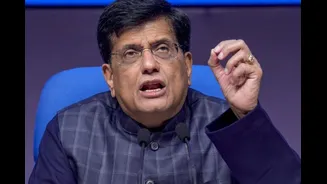
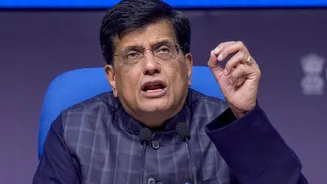
Central to the Indian government's narrative surrounding the trade deal is a firm commitment to safeguarding the interests of its agricultural sector. Union Commerce and Industry Minister Piyush Goyal has repeatedly emphasized that Prime Minister Narendra Modi has ensured no compromises were made regarding the welfare of farmers, the dairy industry, or other stakeholders in the agricultural domain. Government sources have echoed these sentiments, indicating that sensitive sectors, particularly agriculture and dairy, are likely to remain largely outside the scope of major market-opening commitments. This approach aims to reassure rural communities and protect their livelihoods. The government has pledged to provide comprehensive details of the agreement soon, allowing for a clearer understanding of its implications for various sectors. This emphasis on national interest and farmer welfare is a cornerstone of the government's stance on the deal.
Economic Repercussions and Reactions
The announcement of the India-US trade deal has been met with considerable optimism and has already begun to influence market dynamics. Stock markets in India experienced a significant rally following the news, with benchmark indices like the BSE Sensex and NSE Nifty surging, reflecting increased investor confidence. This positive market reaction is attributed to expectations of enhanced export opportunities for Indian industries and a more stable trade environment. The Indian Rupee also saw an appreciation against the US Dollar, signaling a return of optimism in currency markets. Beyond market performance, industry bodies and business leaders have largely welcomed the pact, anticipating new avenues for growth and increased competitiveness for sectors like MSMEs. The deal is seen as a catalyst for boosting global competitiveness and potentially attracting further investment and credit flow into the Indian economy.
Diverse Perspectives and Criticism
While the India-US trade deal has been widely hailed as a significant achievement, it has also drawn criticism and scrutiny from various political and social quarters. Opposition parties, including the Congress, have indicated their intention to raise the issue in Parliament, questioning the terms and potential implications of the agreement. Concerns have been voiced regarding potential disadvantages for Indian farmers and the possibility of increased imports of American agricultural products. Some critics have also pointed to the perceived disparity in tariff reductions, with India's tariffs being reduced to 18 percent while US products are slated for zero tariffs. However, government officials have strongly refuted these criticisms, accusing opposition leaders of attempting to mislead the public and displaying double standards. The government maintains that the deal is in the best interest of the nation and all its citizens.