


What Is Bioluminescence?
Bioluminescence, a captivating natural spectacle, occurs when living organisms generate and emit their own light. This luminous display is the result of
intricate chemical reactions happening within the organism, releasing energy in the form of light. A familiar example of this phenomenon is the twinkling of fireflies on a summer evening. In aquatic environments, this ability is widespread, with numerous marine creatures possessing the capacity to glow. This includes a diverse range of life, from microscopic plankton and ethereal jellyfish to certain species of sharks. The fundamental component for light production in these organisms is a molecule known as luciferin. When luciferin interacts with oxygen, it produces light. Many bioluminescent creatures also produce an enzyme called luciferase, which acts as a catalyst, accelerating the reaction between luciferin and oxygen. For marine life, particularly those inhabiting the deep, dark oceans where sunlight cannot penetrate, bioluminescence serves as a vital survival tool. It aids in navigation, communication with other organisms, luring unsuspecting prey into a deadly embrace, and attracting potential mates in the vast expanse of the sea. This intrinsic light-producing capability is a testament to the remarkable adaptations found in the natural world, turning the ocean's depths into a canvas of living light.
Glowing Waves Explained
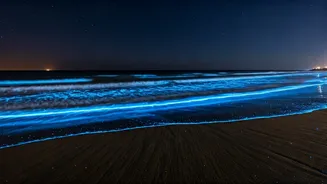
The mesmerizing blue glow observed in ocean waves is often attributed to a specific group of tiny, single-celled organisms called dinoflagellates. These microscopic life forms, which drift near the surface of the water, possess the remarkable ability to bioluminesce. Under specific environmental conditions, these dinoflagellates can multiply rapidly, forming dense concentrations, or blooms, at the water's surface. When disturbed, such as by the movement of waves or the passage of a boat, these dense populations of dinoflagellates are triggered to emit their characteristic blue light. This collective luminescence creates a visually stunning effect, transforming the breaking waves into streaks and flashes of radiant blue, much like scattered starlight on the water's surface. This phenomenon turns ordinary coastlines into otherworldly landscapes at night, captivating onlookers with its transient beauty. The intensity of the glow can vary depending on the concentration of these organisms and the degree of disturbance in the water, making each sighting a unique and often unpredictable experience.
India's Luminous Shores
India offers several breathtaking locations where you can witness the enchanting spectacle of bioluminescence. Bangaram Island in Lakshadweep is a premier destination, where this blue glow intermittently graces the shores at night, creating an idyllic and magical atmosphere. Due to its remote and protected nature, access to Bangaram Island requires careful planning and advance bookings. The Andaman and Nicobar Islands, specifically Swaraj Dweep (Havelock Island), also become a stage for this natural wonder for certain periods of the year, with the prime viewing months falling between November and February. Closer to Mumbai, beyond Juhu Beach which has seen sporadic reports, Aksa Beach has also been noted for occasional bioluminescent sightings. Venturing further, Karnataka's Padubidri Beach and Goa's Betalbatim Beach are also renowned spots where visitors have a chance to experience this radiant phenomenon. These locations, each with its unique charm, offer incredible opportunities to immerse oneself in the glowing beauty of marine life.
Viewing Bioluminescence Tips
To maximize your chances of witnessing the magical bioluminescence, keep in mind that this natural display is not a daily occurrence and is often elusive. The best conditions for viewing are typically during moonless nights, as the absence of moonlight allows the faint glow of the organisms to be more apparent. For marine bioluminescence, the monsoon and post-monsoon seasons, generally from June to September, provide ideal environmental conditions for dinoflagellates to thrive and produce light. It is highly recommended to seek out locations that are far from the disruptive light pollution of cities, as artificial lights can significantly diminish the visibility of the bioluminescent glow. Visiting these sensitive ecological areas with an experienced guide is advisable; they can help you navigate safely and responsibly. Crucially, visitors must refrain from touching or collecting the glowing organisms, as this can harm them and disrupt the delicate ecosystem. By adhering to these guidelines, you can ensure a responsible and unforgettable encounter with this extraordinary natural phenomenon.