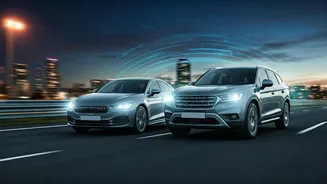









How V2V Operates
Vehicle-to-Vehicle (V2V) technology utilizes a sophisticated system to ensure vehicles can communicate in real time. Each vehicle is equipped with sensors
and a communication module. These components constantly exchange data, including speed, location, and direction, with other vehicles in the vicinity. This communication happens over a dedicated short-range communication network, allowing for quick and reliable data exchange. The technology analyzes the received data to identify potential hazards, such as an approaching vehicle in a blind spot or a sudden braking ahead. When a potential danger is detected, the system alerts the driver through audio-visual warnings, giving them a crucial head start to respond. The system is designed to provide alerts quickly enough to help prevent collisions or reduce their severity. This proactive approach sets V2V apart from traditional safety measures, aiming to make roads safer by creating a network of informed vehicles.
Preventing Road Accidents
V2V technology is primarily designed to prevent road accidents through various safety features. One key function is collision warning. If a vehicle detects the risk of a collision, either with another vehicle or a stationary object, the system will immediately alert the driver, giving them precious seconds to react. Blind spot warnings are also a significant feature. If another vehicle is present in a driver's blind spot, the system sends an alert, which assists in safe lane changes and maneuvers. Furthermore, the technology helps manage traffic flow efficiently. By sharing real-time information about traffic conditions, vehicles can adjust their speed and route, reducing congestion and the chances of sudden stops. Another important capability is the ability to detect and respond to sudden braking. If a vehicle ahead brakes abruptly, V2V transmits a warning to following vehicles, giving them ample time to slow down, avoiding potential rear-end collisions. With these advanced functions, V2V technology greatly enhances road safety.
Benefits for Drivers
Vehicle-to-Vehicle (V2V) technology is set to offer a number of advantages for drivers. One of the primary benefits is improved safety. By providing real-time warnings about potential hazards, V2V can significantly reduce the risk of accidents. This technology offers drivers enhanced peace of mind, knowing they have an extra layer of protection on the road. Secondly, V2V can make driving less stressful. The system monitors traffic conditions, alerting drivers about potential congestion, allowing them to adjust their routes accordingly. Another benefit is improved traffic flow. When vehicles communicate and coordinate their movements, traffic congestion is reduced. Furthermore, V2V encourages smoother driving, decreasing the likelihood of sudden braking and acceleration. The technology can also help save fuel, as smoother driving leads to more efficient fuel consumption. Overall, V2V technology aims to make driving safer, less stressful, and more efficient for all road users.
Government Initiatives
The Indian government has recognized the importance of Vehicle-to-Vehicle (V2V) technology in improving road safety. The decision to introduce this technology reflects a commitment to reduce the number of accidents and improve overall road infrastructure. The government's plan involves several key steps. Firstly, they will need to establish the necessary infrastructure to support V2V communication. This includes setting up communication networks and standardizing the technology across all vehicles. Secondly, the government is likely to collaborate with automotive manufacturers to integrate V2V systems into new vehicles. This will ensure that new vehicles are equipped with this safety technology. Thirdly, extensive testing and trials will be essential before widespread deployment. This will help to fine-tune the technology and ensure its effectiveness in Indian road conditions. Additionally, the government will need to educate drivers about the benefits of V2V technology to ensure it is widely adopted. These initiatives demonstrate the government's commitment to making Indian roads safer and more efficient through advanced technology.
Future of Road Safety
The introduction of Vehicle-to-Vehicle (V2V) technology marks an exciting step towards a safer future for road users in India. This innovation promises to bring about notable improvements in road safety, potentially reducing accidents and saving lives. Looking ahead, the integration of V2V technology is likely to enhance the capabilities of autonomous driving systems. V2V can provide crucial information to self-driving cars, making them even safer and more reliable. Further advancements may involve integrating V2V with other technologies, such as traffic management systems and smart infrastructure. Such integration could optimize traffic flow, reduce congestion, and enhance overall efficiency. Moreover, the increased adoption of V2V technology could result in a shift towards a data-driven approach to road safety. This includes gathering and analyzing data on accidents and traffic patterns to improve safety measures. As V2V technology evolves, it will undoubtedly contribute to a safer, smarter, and more efficient road network for the nation.