

A Grand Beginning
Opened its doors in 1936, The Imperial stands as Delhi's pioneering luxury hotel, its very existence intertwined with the capital's transformation under
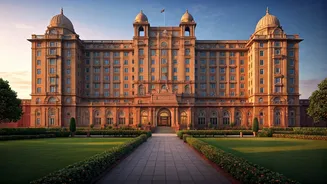
British rule. The decision to relocate India's capital from Calcutta to Delhi in 1911 sparked the creation of a city designed by architects Edwin Lutyens and Herbert Baker, featuring impressive buildings and wide avenues. However, a dedicated establishment to accommodate distinguished visitors, including royalty and administrators, was still a desideratum. This need catalyzed the construction of The Imperial, commissioned by Sardar Bahadur Ranjit Singh, whose father had played a significant role in organizing the 1911 Delhi Durbar. The hotel's architectural vision, a fusion of Victorian aesthetics and Art Deco flair, was shaped by F.B. Blomfield. Its inauguration by Lord Willingdon, the then Viceroy of India, was marked by details like the insignia and lion emblem, thoughtfully selected by Lady Willingdon, embedding a sense of imperial grandeur from its inception. At the time of its opening, a night's stay came with a price tag of Rs 20. Spread across eight acres on what is now Janpath, the hotel was initially characterized by its towering palm trees and the imposing bronze lions guarding its entrance, symbols of both magnificence and authority.
A Hub for Leaders
Very quickly, The Imperial evolved into a preeminent meeting point for prominent figures of the era, drawing in British officials, diplomats, and leading Indian personalities such as Mahatma Gandhi, Jawaharlal Nehru, and Muhammad Ali Jinnah. As the nation approached its independence, the hotel became a significant venue for crucial discussions and negotiations surrounding this momentous period, including those related to the impending Partition of the country. It was within these walls that press conferences involving key leaders like Nehru and Jinnah were reportedly held, with staff allegedly maintaining the original table where these historic interactions took place. Furthermore, rulers of the various princely states also convened at the hotel, underscoring its central role in the political landscape of the time. This historical significance solidifies The Imperial's place not just as a hotel, but as a silent witness to the genesis of modern India.
Witness to Partition
On August 15, 1947, the day India celebrated its hard-won freedom alongside the devastating upheaval of Partition, life continued with a semblance of normalcy at The Imperial. While the city of Delhi grappled with an overwhelming influx of refugees and the nation experienced one of history's largest mass migrations, the hotel presented a striking juxtaposition. Diplomacy persisted, meals were served, and guests checked in and out, all while Delhi underwent a profound and irreversible transformation. This continued operation amidst the surrounding chaos has led some historians to characterize The Imperial as a "silent witness" to the profound human cost associated with the political decisions of that era. In the post-independence period, the hotel gradually transitioned into an institution intrinsically linked with political power, albeit under a new national identity. It remained a favored locale for politicians, with members of the Nehru family reportedly retaining a permanent suite, highlighting its sustained relevance in the nation's power circles.
An Enduring Legacy
The Imperial continues to hold significant relevance today, often regarded as a living museum due to its impressive collection of over 5,000 original artworks dating back to the 17th and 18th centuries. Beyond its historical art, the hotel underwent extensive renovations beginning in the 1990s, adapting to the sophisticated expectations of contemporary luxury travelers while carefully preserving its distinguished historical character. Its esteemed guest list has included heads of state, visiting dignitaries, and renowned celebrities such as Kate Winslet, Saif Ali Khan, John Abraham, and Shahid Kapoor, testament to its enduring appeal. Currently managed by the Akoi family, descendants of its original builder Sardar Bahadur Ranjit Singh, The Imperial offers approximately 235 rooms and suites that artfully blend Art Deco elements with classic English-style decor. Featuring fine-dining establishments, meticulously landscaped gardens, a luxurious spa, the grand Royal Ballroom, and heritage bars, The Imperial diligently safeguards its legacy as one of Delhi's most iconic and recognizable landmarks.