







Expanding Plant Capacity
The Brihanmumbai Municipal Corporation (BMC) has informed the Bombay High Court that its planned Sewage Treatment Plant (STP) in Worli requires a significantly
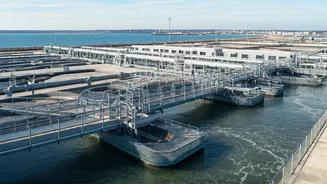
larger area than initially allocated. Instead of the 17,756 square metres previously permitted, the BMC asserts that the entire 27,000 square metres is essential. This decision stems from projections of Mumbai's burgeoning population and the corresponding increase in sewage generation. The civic body plans to construct a facility capable of treating up to 500 Million Litres per Day (MLD) of sewage to a tertiary level. Initially, the plant is expected to treat 250 MLD for reuse in non-potable applications, with provisions for storage and distribution of this treated water, which were not factored into earlier calculations. The ultimate goal is to upgrade the full 500 MLD capacity to potable water standards to address future municipal requirements.
Critical Infrastructure Underpinning
Adding to the complexity of the land acquisition, the Worli site is crucial for managing existing and future wastewater. The proposed plot is traversed by two major sewer trunk lines, dating back to the British era, which are vital for conveying substantial sewage volumes from key city wards including F/South, G/South, and G/North. These lines, situated approximately 30 feet below ground and extending about 450 metres across the site, are not only operational but also play a critical role in stormwater management during heavy rainfall. The BMC emphasized their strategic importance, warning that any damage could lead to severe flooding and disastrous situations. Consequently, ensuring unimpeded access for the ongoing operation and maintenance of these historical yet essential conduits is a primary concern driving the need for the larger contiguous area.
Legal Wrangling and Development
The BMC's request for more land has emerged amidst a legal challenge initiated by Worli Urban Development Project LLP, formerly Lokhandwala DB Realty LLP, the developer of a slum rehabilitation project. The developer had challenged a stop-work notice issued by the BMC. This notice came after the High Court had initially permitted the BMC to use the 17,756 sq.m plot but intended to investigate how the original reservation for a larger 27,698 sq.m area was reduced. The court had halted construction of transit buildings, noting that the Slum Rehabilitation Authority (SRA) proceeded despite BMC's objections. The BMC filed an affidavit detailing its updated requirements, responding to a court directive for an explanation of its changed stance. The court has since sought the developer's response to the BMC's affidavit, scheduling further hearings.