






Understanding Purity Marks
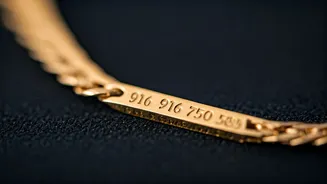
The small engravings on your gold ornaments are not mere decorations; they are crucial indicators of the metal's purity. These numbers, often found on the clasp
or inside the band, provide a standardized system to understand the exact composition of gold in your jewellery. For instance, the widely recognized '916' mark signifies that the item contains 91.6% pure gold. This percentage is directly correlated to its karat rating, with 916 equating to 22-karat gold. The remaining percentage is typically an alloy of other metals, such as copper, silver, or zinc, which are added to enhance the durability and strength of the gold, making it more suitable for everyday wear and intricate designs.
The 916 Gold Standard
In India, the '916' stamp is a familiar sight on gold jewellery, denoting 22-karat purity. This means that for every 1000 parts of the metal, 916 parts are pure gold. The remaining 84 parts are intentionally mixed with other metals to achieve a balance between the lustrous appeal of gold and the practical necessity of strength. This particular purity level is the cornerstone of traditional Indian jewellery crafting, offering a beautiful sheen while being robust enough for elaborate designs and frequent wear. It's a testament to centuries of craftsmanship and cultural significance embedded in gold adornments.
Exploring 750 and 585 Marks
Beyond the popular 916 mark, other numbers provide insights into different gold purities. The '750' stamp indicates 18-karat gold, meaning 75% of the metal is pure gold. This slightly lower purity results in a harder, more resilient alloy, making it an excellent choice for jewellery that features precious gemstones or diamonds. The increased durability helps secure these stones effectively. Similarly, the '585' marking corresponds to 14-karat gold, comprising 58.5% pure gold. This type of gold is often favoured for lighter, more contemporary jewellery pieces, balancing affordability with aesthetic appeal.
The Pinnacle: 999 Gold
While most jewellery uses alloyed gold for structural integrity, the purest form of gold is denoted by '999'. This signifies 99.9% pure gold, also known as 24-karat gold. However, its extreme softness makes it impractical for crafting intricate jewellery that needs to withstand daily wear. Instead, 999-fine gold is predominantly found in investment forms such as gold coins and bars, where its purity is paramount for value preservation rather than aesthetic design flexibility. Its inherent malleability means it can easily be deformed or scratched.
BIS Hallmarking Explained
In India, the Bureau of Indian Standards (BIS) governs the hallmarking system, ensuring that the purity of gold jewellery is independently verified and certified. When you see a BIS hallmark, it assures you that the piece has passed stringent quality checks. Modern hallmarked jewellery typically bears the BIS logo, the specific purity mark (like 916 or 750), and a unique six-digit Hallmark Unique Identification (HUID) code. This HUID code is a revolutionary addition, allowing buyers to trace and authenticate their jewellery's origin and purity, adding a layer of trust and transparency to gold purchases.