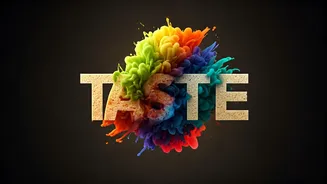







The Taste of Words
For a select few, spoken or read words don't just carry meaning; they evoke distinct gustatory experiences. This phenomenon, known as lexical-gustatory
synesthesia, is a genuine neurological trait where specific words trigger involuntary and consistent taste sensations. It's not a matter of metaphor or imagination; individuals experiencing this report tasting anything from the chalky sensation associated with the word "school" to the sharp tang of citrus or the sweetness of sugar when encountering particular words or names. These taste associations are remarkably stable over time, meaning a word that tastes like, say, butterscotch today will likely retain that flavour profile for the person throughout their life. This condition highlights a fascinating intersection of language processing and sensory perception, demonstrating that for some, the boundaries between hearing, reading, and tasting can be profoundly blurred in a way that feels entirely natural to them.
Brain Wiring Explained
Scientists attribute lexical-gustatory synesthesia to the unique neural architecture within the brains of affected individuals. Typically, the brain regions responsible for processing auditory information, language comprehension, and taste operate in distinct, specialized areas. However, in synesthetes, there are cross-connections between these typically separate zones. When a word is processed, its auditory or visual representation inadvertently activates the taste cortex, leading to the experience of a corresponding flavour. This cross-modal sensory activation is the hallmark of synesthesia, which can manifest in various forms, such as associating colours with sounds or letters, or even perceiving personalities in numbers. The core concept remains the same: one sensory input triggers an experience in a different sensory modality, a phenomenon that, while unusual to the uninitiated, is a consistent and integrated part of the synesthete's reality and perception.
Impact and Perception
The experience of lexical-gustatory synesthesia is generally benign and doesn't pose a threat to an individual's health. In fact, some research suggests that the enhanced neural connections in synesthetes might even offer a cognitive advantage, potentially aiding memory recall due to the additional sensory pathways engaged. However, the condition can sometimes be overwhelming, particularly if common words trigger intense or unpleasant tastes that intrude on daily life and conversations. More broadly, synesthesia challenges our conventional understanding of sensory boundaries. It demonstrates that the brain isn't always rigidly compartmentalized; it can create novel and complex sensory integrations that feel entirely normal to the person experiencing them. For individuals with lexical-gustatory synesthesia, tasting words is not an oddity but an intrinsic aspect of how they perceive and interact with language, offering a unique window into the brain's remarkable adaptability and complexity.