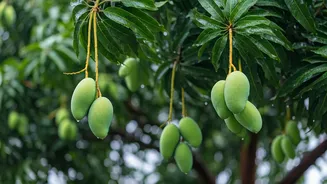

Mangoes Under Threat
India's mangoes, often hailed as the 'king of fruits', are now under threat due to the adverse effects of unseasonal rainfall. This phenomenon disrupts
the usual cycle of mango production, leading to various issues. The early stages of mango development, including flowering and fruit setting, are particularly vulnerable. Excessive rain during these phases can severely damage the blossoms, hindering pollination and reducing fruit yield. Furthermore, the excess moisture creates an ideal environment for fungal diseases and pests, further impacting the quality and quantity of the harvest. This situation has significant implications for farmers, who face potential financial losses, and for consumers, who might experience higher prices and reduced availability of their favorite varieties. The unpredictable nature of the weather adds further complexity, making it difficult for farmers to plan and mitigate risks effectively.
Rain's Destructive Impact
Unseasonal rainfall wreaks havoc on mango crops. The timing and intensity of rainfall are key factors in determining the extent of damage. Heavy downpours during the flowering stage can wash away pollen, which is essential for fruit formation. Even moderate rain during the fruit-setting stage can lead to fruit drop, where the young mangoes fall from the trees prematurely. Moreover, prolonged exposure to moisture weakens the mango trees, making them susceptible to diseases such as anthracnose and powdery mildew. These fungal infections not only affect the current yield but can also impact the health of the trees for future seasons. The effects are not limited to the fruit itself; the quality of the mangoes is compromised, leading to a loss in sweetness, flavor, and shelf life. The reduced quality of the mangoes can impact their market value. Farmers are struggling with increasing input costs for pest and disease control, adding to their financial burdens, and resulting in decreased profit margins.
Farmer Challenges & Solutions
Mango farmers grapple with managing the impact of unseasonal rainfall. They're implementing various strategies to minimize crop damage. One primary measure is to improve drainage systems within orchards to prevent waterlogging. This can involve creating drainage channels or installing drainage pipes. Another approach is to use protective coverings, such as plastic sheets, to shield the trees and fruits from excessive rain. Pruning techniques and orchard management practices can also enhance air circulation, thus reducing the humidity and the risk of fungal infections. Farmers are exploring the use of disease-resistant varieties of mangoes to counter the effect of infections. The use of appropriate pesticides and fungicides at the right time is important for controlling pests and diseases. The changing climatic conditions have necessitated innovations in farming practices for ensuring high yields and quality of mangoes. This includes adopting micro-irrigation systems to regulate the amount of water reaching the trees and protecting the fruit.
Broader Economic Implications
The issue of unseasonal rainfall affecting mangoes extends beyond farmers, impacting the wider economy. The reduced mango yield can lead to a decrease in supply, causing prices to increase in local and international markets. This, in turn, can affect consumer purchasing power. The decreased availability of mangoes impacts the businesses that rely on them. These include fruit processing industries, which use mangoes for making jams, juices, and other products. Small businesses and street vendors that sell mangoes also face the effects of the disruption. The agriculture sector contributes significantly to the Indian economy, and changes in mango production can trigger ripple effects throughout the value chain. This makes mango production a key economic indicator, and any factors that affect its viability have significant ramifications. The government and related organizations are developing solutions to help farmers and stabilize the market, as they realize that the health of the agriculture sector is vital to the country's economic stability.