





ISRO's 2026 Debut
The Indian Space Research Organisation (ISRO) kickstarted its 2026 space activities with the launch of the Polar Satellite Launch Vehicle (PSLV C62). This
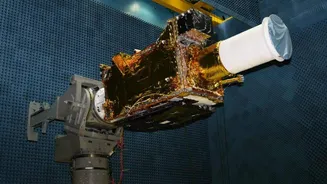
mission was notable as it carried the Earth observation satellite named Anvesha (EOS-N1) along with 14 co-passenger satellites. The launch on January 12th signified a pivotal moment for ISRO, marking the beginning of their planned space endeavors for the year. This particular mission served as the 64th launch for the PSLV, a testament to the reliability and versatility of the rocket. This launch involved placing multiple satellites into orbit, showcasing ISRO's ability to handle complex space missions and its contribution to India's space program.
Anvesha's Orbit Deployed
A core objective of the PSLV C62 mission was the deployment of the Anvesha (EOS-N1) satellite. The mission team carefully planned to place the Earth observation satellite into a polar sun-synchronised orbit. This specific type of orbit allows the satellite to pass over the same location on Earth at a consistent local solar time. The satellite was positioned at least a hundred kilometers above the Earth's surface. Achieving this altitude and orbit was critical for the satellite's primary function of Earth observation. The data collected by Anvesha would provide valuable insights, contributing to areas like environmental monitoring, resource management, and national security.
PSLV's 64th Mission
The PSLV C62 launch not only marked ISRO's first mission of 2026 but also represented the 64th launch of the Polar Satellite Launch Vehicle. This consistent use highlights the PSLV's significant role in ISRO's space program. The PSLV has a proven track record of successfully deploying a wide range of satellites, from Earth observation satellites to those designed for scientific research and communication. The rocket's reliability has made it a key asset for India's space exploration and also a commercially competitive platform, enabling ISRO to offer launch services to other nations and organizations. The mission’s success underscored the technical proficiency and operational expertise of ISRO.