







Post-Election Stalemate
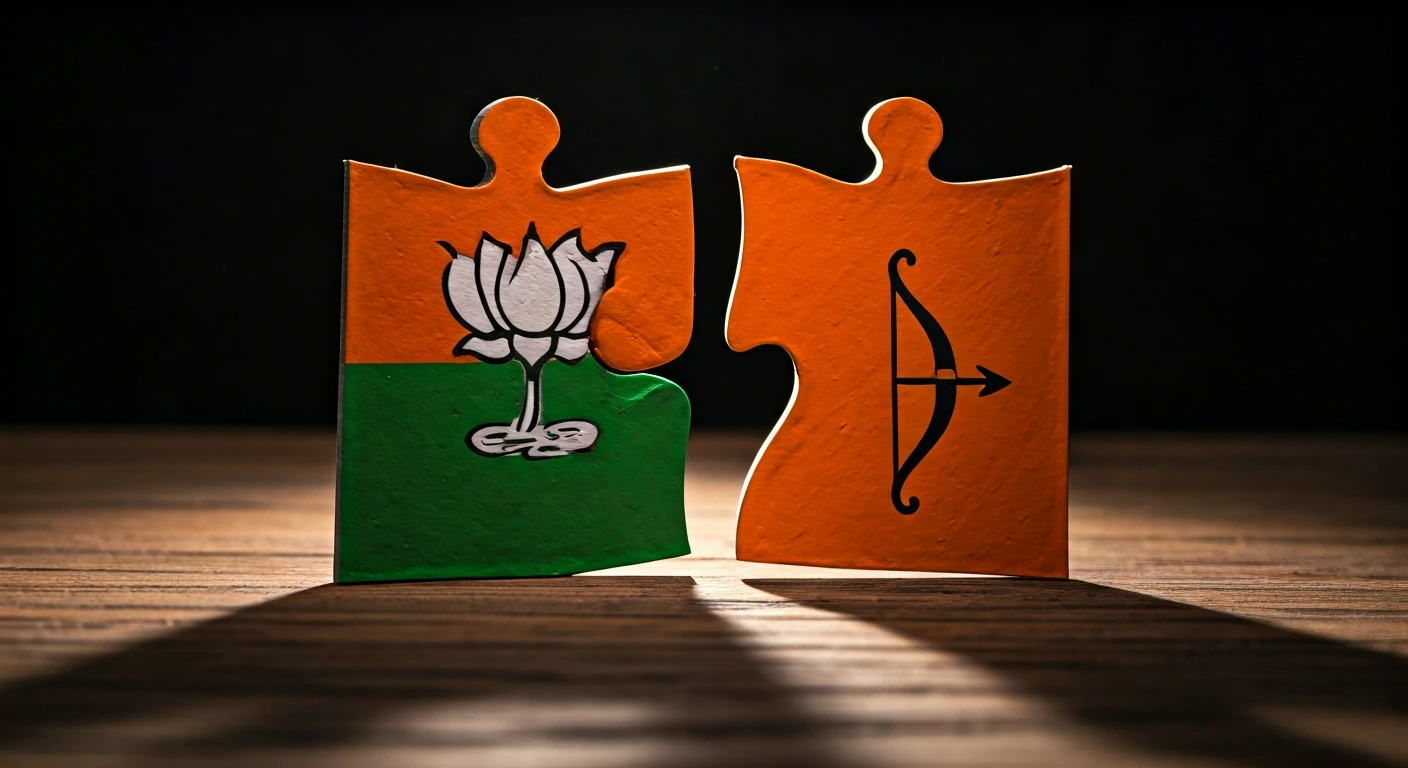
The political arena witnessed a standstill as the BJP and Shiv Sena found themselves in a deadlock, grappling with power-sharing negotiations. The election
results, which were made public ten days prior, served as the backdrop to these unresolved discussions. The lack of progress between the two parties, even after such a time, has been a cause of considerable speculation. Political analysts and the public alike are watching to see how these ongoing discussions will eventually influence the future government framework, and the delay raises serious issues about political stability.
Unveiling the Disputes
While the exact nature of the disputes is shrouded in a veil of secrecy, the fact of their existence adds layers of complexity to the government formation. The lack of transparency surrounding the discussions raises curiosity among political watchers, who are speculating about the core challenges. What are the key points of contention? Are they related to the allocation of portfolios, policy disagreements, or broader ideological differences? Such unanswered questions heighten the atmosphere of anticipation and uncertainty, as these parties attempt to hammer out a framework for the future.
Impact on Governance
The continued failure of the BJP and Shiv Sena to reach an accord on power-sharing carries far-reaching consequences. It brings with it an aura of uncertainty, which has the potential to impede key decision-making processes. The delay in forming a government could lead to delays in policy implementation and leave critical areas unattended. The public is likely to experience frustration and unease as they observe the political situation evolving. The longer the deadlock persists, the more significant the impact on the smooth functioning of governance and the overall stability.
Political Ramifications
The power-sharing impasse has far-reaching effects within the political landscape. It can potentially affect the dynamics among the involved parties and create opportunities for other political players. Other parties might take advantage of the disarray. The failure to resolve these disagreements will inevitably have an impact on the broader political scenario, possibly reshaping alliances, creating new political equations, and influencing the government's future direction. The current atmosphere suggests that the consequences of this delay could extend beyond the formation of a government and into the very core of national politics.
Next Steps Needed
In order to resolve the deadlock, the BJP and Shiv Sena must engage in open, honest, and decisive negotiations. To move forward, the involved parties should attempt to negotiate more effectively. A willingness to make concessions, recognizing the need for compromise, will prove crucial in bringing the parties closer to an agreement. The public will be hoping that those in power recognize the importance of their role, and work towards a resolution that will be in the best interest of their people. The focus should be on resolving these disputes expeditiously and setting up a government that can effectively govern and tackle the nation's many challenges.