




A Historic Pact
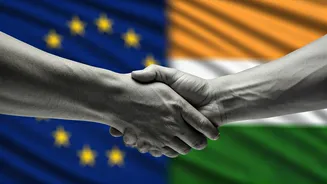
The culmination of efforts saw India and the European Union concluding a major trade agreement. This deal, described as the "mother of all trade deals,"
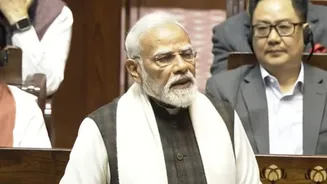
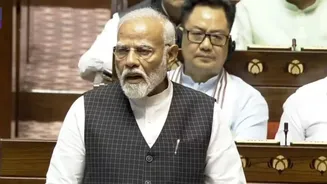
is poised to foster an era of shared prosperity. It encompasses key trade and defense pacts, with Prime Minister Modi highlighting its importance. The agreement signifies a fresh beginning in the global trade arena, with a goal to eliminate tariffs on a significant portion of traded goods. This move is expected to enhance economic ties and open new avenues for collaboration between India and the EU. The agreement is also anticipated to enhance the ease of travel and residency within the EU for Indian students and professionals. This strategic alignment underscores the commitment of both parties to strengthen their economic partnership on the global stage, potentially leading to increased investments and job opportunities. The deal is expected to be a blueprint to encourage a new global trade order.
Trade Liberalization Details
The India-EU Free Trade Agreement (FTA) aims to liberalize trade, with a significant 96% of trade set to become tariff-free. This significant reduction in tariffs is expected to boost trade volumes between India and the EU. However, the agreement also acknowledges specific sectors with protective measures. Dairy products and small cars are among the items that will retain protection. This careful approach reflects a balanced strategy to promote trade while addressing the needs of sensitive sectors. The move is designed to create a conducive environment for businesses and consumers, facilitating greater access to goods and services. The FTA is expected to provide opportunities for domestic industries to expand their reach and compete more effectively in the international market. The strategic focus on trade liberalization will likely enhance the overall economic growth and development of both India and the EU.
A New Trade Order
This FTA is being hailed as a catalyst for a new global trade order. It could potentially change how international trade agreements are structured and implemented. By reducing tariffs and fostering deeper economic ties, the deal sets a precedent for other nations to consider similar partnerships. This could usher in a new era of global trade, promoting cooperation and interdependence among countries. The agreement is likely to streamline trading processes and create a more transparent environment for businesses. The India-EU FTA represents a strategic alignment that goes beyond mere economics, symbolizing a commitment to shared values and mutual growth. This signifies a move towards greater global integration and cooperation, creating opportunities for businesses and consumers.
Impact and Future
The implications of this agreement extend far beyond immediate economic benefits. It's poised to influence the geopolitical landscape, fostering a stronger partnership between India and the EU. The FTA is expected to boost investment and spur economic activity in both regions. The deal can also enhance the collaborative efforts in defense, technology, and various other sectors. The agreement lays the groundwork for a more robust and resilient relationship between India and the EU. The FTA may encourage other nations to seek similar partnerships, potentially reshaping the global trade environment. Ultimately, the India-EU agreement marks a significant step towards a more interconnected and prosperous world.