






Expanding Air Connectivity
Mumbai is embarking on a significant infrastructural upgrade to bolster its transportation network, with plans to establish four new helipads within the
next six years. This ambitious project, spearheaded by both the Brihanmumbai Municipal Corporation (BMC) and the Mumbai Metropolitan Region Development Authority (MMRDA), aims to create a robust multi-modal transit system. The BMC is set to construct two helipads, strategically positioned adjacent to the north and south stretches of the upcoming Mumbai Coastal Road Project. Concurrently, the MMRDA will develop two helipads in the bustling Bandra Kurla Complex (BKC), Mumbai's prime business hub. This initiative signifies a forward-thinking approach to urban planning, ensuring the city is better equipped for future demands and emergencies. The construction will largely be managed through a public-private partnership model, where private contractors will invest in building and maintaining these facilities, with revenue sharing between the contractors and civic authorities. This collaborative approach is expected to expedite the development and operationalization of these crucial air transit points.
Strategic Locations Chosen
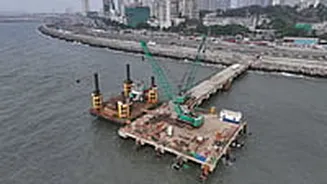
The proposed helipads are being strategically placed to maximize accessibility and operational efficiency. The BMC's first helipad will be situated in Charkop, adjacent to the northbound route of the Mumbai Coastal Road Project. This follows a prior tender floated for a helipad near the southbound stretch of the coastal road in Worli, with the contract awarded to the Raymond group. The site for the Worli helipad, previously an old jetty, is being repurposed. For its second helipad, the BMC has identified two potential land parcels in Kandivali's Charkop, also conveniently located near the proposed northbound arm of the coastal road, which is planned to link Versova with Bhayander. The rationale behind these specific locations, especially near the coastal road, is to ensure seamless connectivity. This positioning will allow passengers to easily transition from helicopters to ground transportation, facilitating swift movement across the city. Furthermore, the proximity to the sea offers an advantage, minimizing the risk of obstructions from future high-rise constructions and ensuring clear flight paths for helicopters entering the mainland.
Emergency Services Focus
A primary objective driving the development of these new helipads is to enhance emergency services, particularly for air ambulance operations and rapid evacuations during unforeseen circumstances. As Mumbai continues to develop high-speed infrastructure like the Coastal Road and the Goregaon Mulund Link Road (GMLR) within the next five years, the helipads will serve as a crucial component of a comprehensive multi-modal transit system. This ensures that in critical situations, medical assistance can be delivered swiftly, and citizens can be evacuated efficiently. The authorities envision these facilities as vital lifelines, providing an essential backup for immediate response needs. While global financial centers often boast helipads for commercial and private use, Mumbai's immediate focus is on leveraging this infrastructure for public safety and emergency preparedness. The aim is to provide a reliable and quick aerial route for critical interventions, safeguarding lives and facilitating swift disaster management when required.
Past Helipad Initiatives
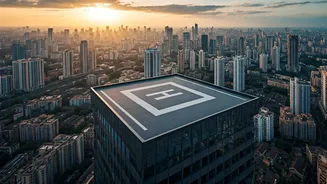
Mumbai has seen previous attempts to establish and upgrade helipad facilities, with mixed results. In 2014, the state government proposed enhancing the heliport at the Mahalaxmi Racecourse, which has historically been used by VIPs. However, this proposal faced opposition from turf club members and did not materialize into a full-fledged heliport. Additionally, the BMC had previously permitted private developers to construct helipads atop residential and commercial buildings exceeding 200 meters in height. While many private buildings have indeed incorporated helipads, a significant number remain largely unused. This is often attributed to the proliferation of surrounding skyscrapers, which can obstruct flight paths and render the helipads non-operational. Currently, the Raj Bhavan, the official residence of the state governor, has an operational helipad restricted to VIP use. Similarly, two private hotels in the city also feature helipads primarily catering to VIPs. These past experiences highlight the challenges of site selection and the impact of urban density on helipad functionality, underscoring the importance of careful planning for the new projects.
Policy and Future Vision
Urban planners and experts emphasize the need for a unified policy to govern helipad operations within Mumbai. Architect Alan Abraham points out that in major global cities like New York and London, helipads are common and serve a broader public, not just private users. He advocates for ensuring that Mumbai's new helipads prioritize emergency services and cater to the general populace rather than a select few. The current plan, with helipads strategically placed near the Coastal Road, aims to address past issues by leveraging open sea-facing locations that are less susceptible to obstructions from new constructions. This approach is intended to ensure the long-term viability and accessibility of these air transit points. By 2030, with the integration of these four new helipads alongside the expanding high-speed corridors like the Coastal Road and the Goregaon Mulund Link Road, Mumbai aims to create a more resilient and efficient urban mobility network, capable of meeting both daily transit needs and critical emergency situations.