








Aircraft Grounded by Strike
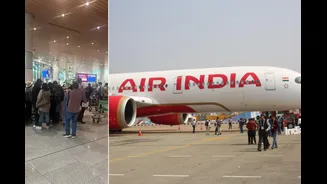
Passengers arriving at Mumbai airport on Monday faced an unexpected and frustrating delay, being confined to their aircraft for up to 90 minutes after
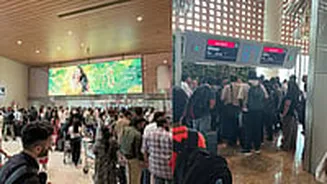
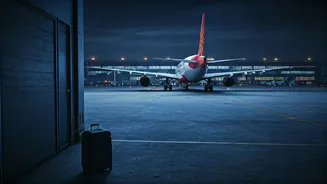
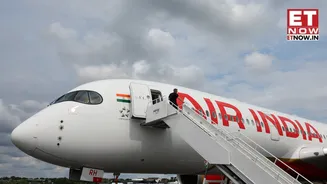
landing. This extensive standstill was a direct consequence of a work stoppage by employees of a third-party ground handling agency. This industrial action, essentially a strike, crippled essential ground operations for both Air India and Air India Express. Crucial services such as assisting passengers with deplaning, unloading baggage, and servicing the aircraft were either significantly delayed or entirely unavailable. The repercussions extended beyond the tarmac, with passengers experiencing further lengthy waits, sometimes exceeding an hour, for their checked baggage even after disembarking.
Passenger Ordeals Shared
The human impact of this disruption was vividly illustrated through social media posts. One passenger, a seafarer named Atul Sharma, expressed severe disappointment with Air India's service at Mumbai Airport. Arriving on Flight AI 2995 from Delhi, he reported that despite landing over an hour prior, his baggage had still not arrived, and staff offered no adequate assistance. Sharma emphasized the urgency of his situation, stating he and his colleagues needed to join their ship from Mumbai, and missing it could lead to job repercussions and considerable financial losses. Another traveler, on Flight AI 2852, reported being seated inside the aircraft for over an hour after a 12:01 PM landing, with the reason cited being the industrial strike and resulting staff shortage. At least three specific flights, AI 2852, AI 2874, and AI 2995, were confirmed to be affected by this widespread operational breakdown.
Airline's Official Response
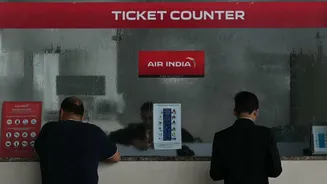
In response to the mounting passenger complaints and visible disruptions, Air India released a statement acknowledging the situation. The carrier confirmed that the "industrial action by employees of third-party ground handling agency at Mumbai airport" was indeed impacting Air India Express and Air India operations. The statement assured that airport teams were actively collaborating with "all stakeholders" to mitigate passenger inconvenience and expedite the return to normal services. However, the airline's communication conspicuously omitted the name of the specific agency involved, failed to detail the underlying cause of the workers' action, and provided no estimated timeframe for resolving the issue. This lack of specific information left stranded passengers with limited clarity or recourse.
The Role of Ground Handlers
Ground handlers are the unsung heroes of air travel, forming the essential infrastructure that enables flights to operate efficiently. Their responsibilities are extensive, encompassing parking the aircraft, managing the aerobridge or steps for passenger access, unloading baggage from the aircraft's hold, refueling the plane, cleaning the cabin, and assisting with check-in procedures. When these workers cease their duties, the entire flight turnaround process is halted. Arriving aircraft become stranded at their bays, while departing flights begin to accumulate, leading to passengers being held within the planes themselves. Mumbai airport, a major hub handling over 50 million passengers annually, is particularly susceptible to the cascading effects of such labor stoppages. A disruption at even a single significant ground handling provider can swiftly create widespread chaos across airport terminals.
Historical Precedents
This incident at Mumbai airport is not an isolated event for Air India concerning ground handling disruptions. A similar situation occurred in 2018 when employees of AIATSL, Air India's own ground handling subsidiary, staged a spontaneous strike over unpaid Diwali bonuses. That work stoppage caused significant delays for more than 37 domestic and international flights, with some grounded for up to three hours. The pattern observed was strikingly similar: an abrupt industrial action without prior warning, leading to rapid escalation and widespread flight cancellations and delays. Normal operations were only reinstated following direct negotiations between the striking employees and management, underscoring the vulnerability of flight schedules to ground staff grievances.
Moving Forward and Advice
Air India has stated that its operational teams are actively engaged in efforts to restore normalcy to their services following the ground handling strike. However, the specific demands of the ground handling workers and the projected timeline for resolving this standoff remain uncertain. In light of the ongoing unpredictability, affected passengers are strongly advised to verify their flight status before making their way to the airport. This proactive step can help them stay informed and potentially avoid further inconvenience caused by unforeseen operational changes.