





Light's Colorful Secret
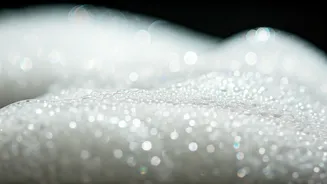
The perception of white in soap foam is a direct consequence of how light interacts with the numerous tiny air pockets trapped within the soapy film. While
we perceive sunlight or artificial light as white, it is, in fact, a composite of all the colours in the visible spectrum. When this light encounters the vast network of microscopic bubbles that constitute foam, it undergoes a process known as scattering. Each individual bubble acts like a tiny, imperfect mirror, reflecting and refracting the light in countless directions. This rapid and chaotic redirection of light causes all the constituent colours to recombine, and our eyes perceive this mixture as a uniform white. It's not that the foam lacks color, but rather that the physical structure of the foam actively disperses and blends the light, masking any inherent hue.
The Fading Color
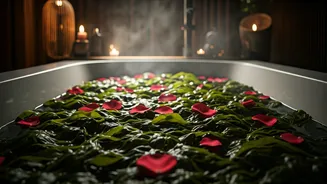
The vibrant colours we see in liquid soaps don't disappear; they become incredibly diluted once the foam is formed. The dyes used to colour soap are added in relatively small quantities. When the soap transforms into foam, these colour molecules are spread incredibly thinly across the vast surface area of the bubble films. This immense spreading effect means the dye concentration within each bubble wall becomes so minute that it's practically imperceptible to the human eye. Coupled with the overwhelming effect of light scattering, which dominates the visual perception, the faint traces of colour are completely overpowered. Consequently, the overwhelming white light scattering effect ensures that the foam appears white, even if the liquid soap was a deep shade of red or blue.
Bubble Size Matters
The diminutive size of the bubbles within soap foam is a critical factor in its white appearance. Foam is characterized by an exceptionally large number of very small air bubbles, and this microscopic scale is key to the intense light scattering phenomenon. When light encounters these minuscule bubbles, it's reflected and refracted far more effectively than it would be with larger air pockets. If the bubbles were significantly larger, light would have a greater chance of passing through them with less diffusion, potentially allowing some of the soap's inherent colour to become visible, or rendering the foam more transparent. However, because the bubbles are so incredibly small, they create a dense matrix that scatters light so powerfully and uniformly that the resulting foam appears brilliantly white.
Everyday Science Wonders
The captivating science behind white soap foam is a prime example of how even the most mundane aspects of our daily lives hold fascinating scientific principles. This same phenomenon of light scattering by small particles is responsible for other natural wonders, such as the dazzling white of clouds and the pristine appearance of freshly fallen snow. Recognizing these connections between the natural world and scientific laws can transform ordinary moments into extraordinary learning experiences. The next time you witness a cascade of white suds, take a moment to appreciate the intricate 'light show' orchestrated by countless tiny bubbles, a testament to the pervasive and elegant science that shapes our world.