


The Lohri Spirit
Lohri, a festival celebrated with gusto, signifies the culmination of the winter solstice and the welcoming of longer days. The essence of Lohri is captured
in its traditions, notably the bonfire, which symbolizes the burning of negativity. Family and friends come together, making it a time for sharing and togetherness. Lohri is celebrated with great fervor in North India, especially in Punjab and Haryana. The festival is traditionally observed by lighting a bonfire, singing folk songs, and feasting on a variety of treats. A key element of the celebration involves offering prayers and seeking blessings, representing gratitude for a bountiful harvest and good health. This festive season is best enjoyed with loved ones.
Sarson da Saag
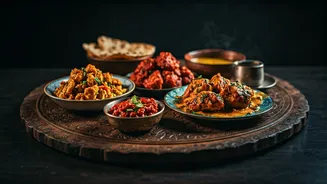
Sarson da Saag, the quintessential dish of Punjab, finds its place on the Lohri table. It's a flavorful dish made from mustard greens. The leaves are typically chopped finely and cooked with other greens like bathua and spinach, seasoned with spices like ginger, garlic, and green chilies. The cooking process often involves slow simmering, resulting in a rich, slightly bitter flavor. This dish is usually served with Makki di Roti, a flatbread made from cornmeal, completing the iconic culinary pairing. Sarson da Saag holds a special significance during Lohri, representing the richness of the harvest and the bounty of the land. Its preparation can be a time-consuming process, but the delicious taste and cultural importance make the effort worthwhile.
Makki di Roti
Makki di Roti, the iconic cornmeal flatbread, is a staple alongside Sarson da Saag, creating a perfect culinary combination for Lohri. The making of Makki di Roti requires skill, as the cornmeal dough can be tricky to handle. It is usually made by hand, with the dough patted into a round shape. Cooking takes place on a flat griddle or tava, where the roti browns and puffs up slightly. The texture of the roti is slightly coarse but adds a unique taste and character to the meal. Whether handmade or made with the help of a machine, Makki di Roti holds the essence of Punjabi culture, connecting people to tradition, and enhancing the warmth of any Lohri gathering.
Gajak and Rewari
Gajak and Rewari, both made from sesame seeds and jaggery, are traditional sweets that add sweetness to Lohri celebrations. Gajak is a brittle sweet that is often made during the winter months. Rewari is another sweet that comes in the form of small, round, or square sesame candies. These sweets are often shared amongst family and friends, symbolizing the sweetness of the season and the bond between people. These are enjoyed after the bonfire, the act of distributing and eating these sweets is a sign of celebrating the festive season with joy. Gajak and Rewari contribute to the festive spirit, making Lohri a time of indulgence and celebration.
Peanuts and Popcorn
Roasted peanuts and popcorn are two more essential treats enjoyed during Lohri celebrations. Peanuts, often roasted and sometimes flavored with salt and spices, are a common snack consumed around the bonfire. Popcorn, light and airy, is another popular choice. Both snacks symbolize the harvest, with peanuts representing the bounty of the earth. These simple yet satisfying treats are shared among family and friends, adding to the jovial atmosphere of the celebration. They are usually eaten while singing folk songs and dancing, creating a complete festive experience. Peanuts and popcorn bring together the spirit of togetherness, enhancing the warmth and joy of the Lohri festival.