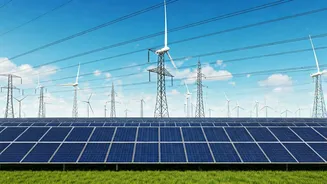







Energy Capacity Growth
India has experienced substantial growth in its solar and wind energy capacity, marking a significant move towards renewable sources. Despite this progress,
several impediments exist. These issues involve the intricate aspects of how renewable energy is distributed and how the energy market is structured. This presents a considerable challenge in fully capitalizing on the potential of renewable energy across the country. The integration of renewable energy isn't just about generating more power; it is also about ensuring that this power reaches consumers efficiently and effectively, minimizing disruptions, and supporting the grid's stability.
Distribution Obstacles
One of the major barriers relates to the distribution networks. These networks, initially built for traditional power sources, face difficulties in accommodating the intermittent nature of solar and wind energy. The unpredictability of these renewable sources can lead to grid instability if not managed effectively. Upgrading and modernizing these networks is therefore crucial. This involves investing in smart grid technologies, enhancing grid flexibility, and improving the capacity to manage fluctuations in energy supply. The lack of standardized infrastructure and the varying capabilities of different state distribution companies further complicate matters. Coordination and investment across different states is necessary to provide an integrated and dependable system.
Market Design Issues
The design of the electricity market also poses challenges. Current market structures often don't fully support renewable energy. The pricing mechanisms, for instance, might not always reflect the value of renewable energy, particularly during times of low demand or high supply. This can lead to underutilization of renewable energy resources. Furthermore, complexities in power purchase agreements and the lack of robust mechanisms for grid balancing and ancillary services further compound the issues. Revising market rules to prioritize renewable energy, providing incentives for grid stability services, and fostering competition among renewable energy generators can stimulate their effective utilization. This may include policies like time-of-day pricing and demand-side management.
Institutional Hurdles
Institutional factors, including regulatory frameworks and the roles of various stakeholders, influence the integration of renewable energy. There can be inconsistencies in policy implementation across different states, creating uncertainty for investors and developers. Streamlining regulations, improving coordination among various government agencies, and building the capacity of regulatory bodies are essential. A cohesive and clear policy environment, coupled with effective enforcement, is crucial. Furthermore, the capacity of distribution companies needs to be strengthened. This includes providing the technical know-how and financial resources to manage and integrate renewable energy effectively. Encouraging public-private partnerships can foster the development of infrastructure and bring in expertise and funding.
Future Outlook
Overcoming these hurdles is key to achieving India's renewable energy goals and ensuring a sustainable energy future. Addressing distribution network constraints, redesigning market structures, and strengthening institutional frameworks will be critical. Investing in smart grid technology, promoting policy harmonization, and incentivizing renewable energy projects are essential steps. The government, along with private entities, must collaborate to create a robust ecosystem that supports renewable energy growth. India needs a comprehensive strategy, combining technological advancements, policy reforms, and institutional strengthening to ensure that renewable energy can power its future. This includes ongoing monitoring and assessment of policies and their impact.