






Record Turnout Dynamics
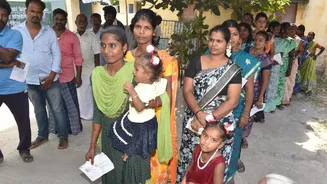
Tamil Nadu witnessed an unprecedented voter turnout of 84.69% in its recent elections, setting a new historical benchmark. This surge has prompted pollsters
to re-evaluate their forecasting models. While historically high turnout has often been linked to anti-incumbency sentiment, the current situation is more complex. The significant increase in percentage is partly attributed to a thorough revision of electoral rolls, which removed duplicate and deceased voters, thereby creating a more streamlined electorate and artificially inflating the turnout figure. This heightened participation doesn't automatically translate to a victory for any particular bloc. The ruling DMK enjoys a strong satisfaction rate with its welfare programs, while the AIADMK-led NDA is banking on a consolidated alliance. The sheer volume of voters makes it difficult for exit polls to discern whether new voters are energized by emerging parties like actor Vijay's TVK or if they represent a silent majority supporting the incumbent government's initiatives.
Exit Polls' Troubled History
The track record of exit polls in Tamil Nadu is decidedly mixed, with many struggling to accurately capture the intricate web of alliance vote transfers that define the state's political landscape. A notable instance was the 2016 elections, where the majority of prominent pollsters predicted a win for the DMK, only for J. Jayalalithaa to secure a second consecutive term, a rare feat not seen since 1984. While exit polls were more precise in forecasting the DMK's victory in 2021, they often overestimated the party's seat count. The regional variations, particularly the distinct voting patterns in the "Kongu" (Western) and "South" regions, present significant challenges. Furthermore, the emergence of the Tamilaga Vettri Kazhagam (TVK) as a substantial third force in 2026 introduces an element of vote dilution that traditional exit polling, frequently based on bipolar assumptions, might fail to adequately account for.
Emerging Predictions
Early indicators and post-poll analyses are pointing towards a closely fought, potentially triangular electoral contest. Several major surveys, including those by CVoter and Vakkucheck, suggest a slight advantage for the DMK-led Secular Progressive Alliance (SPA), assigning it a win probability of 62% and projecting a seat range of 138-142. Conversely, the AIADMK-aligned front is demonstrating considerable strength in the northern and Kongu regions, bolstered by consolidated support from the PMK. The entry of Vijay's TVK is expected to draw between 5% and 8% of the vote share, particularly among first-time electors. This fragmentation increases the margin of error for exit polls, making their predictions inherently less certain. The enduring lesson from Tamil Nadu's political history is that, ultimately, only the votes counted within the Electronic Voting Machines (EVMs) will determine the true outcome.