





The Grand Vision Unveiled
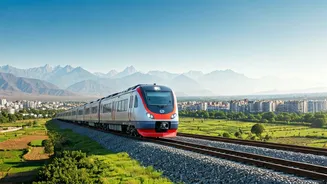
A groundbreaking proposal is gaining momentum to extend India's cutting-edge regional rapid transit network, Namo Bharat, all the way to the scenic Himalayan
foothills. This ambitious project is poised to revolutionize travel and economic landscapes throughout the western Gangetic plain. If realized, it could dramatically slash the travel time between Delhi and Rishikesh to a mere three hours, transforming how people experience the region. This vision is currently being championed by Uttarakhand Chief Minister Pushkar Singh Dhami, who recently met with Union Minister for Power, Housing and Urban Affairs Manohar Lal Khattar. Dhami formally requested the expansion of the existing Namo Bharat corridor from Modipuram in Meerut to Haridwar. Concurrently, he put forth a separate proposal for a dedicated Dehradun-Haridwar-Rishikesh metro corridor. The combined effect of these two initiatives, should they receive approval, would forge a continuous high-speed rail link connecting the bustling capital of Delhi directly to the serene gateway of the Himalayas.
An Extended Network's Route
Currently, the Namo Bharat train efficiently connects Sarai Kale Khan station in Delhi to Modipuram in Meerut, serving as a vital artery in the National Capital Region. The proposed extension aims to build upon this foundation, commencing its journey at Modipuram. From this northern edge of Meerut, the new corridor is slated to extend northward, generally following the path of National Highway 58. This strategic alignment ensures it passes through several key locations that are either already significant or hold substantial future potential. The envisioned route includes Modipuram as the primary departure point, followed by Daurala-Sakauti, an area recognized for its industrial and educational significance. Further along, Khatauli, near Muzaffarnagar, is designated as a crucial junction point. Purkazi, strategically situated close to the Uttar Pradesh-Uttarakhand border, is also on the map. The corridor then proceeds to Roorkee, a prominent academic hub home to IIT Roorkee. Jwalapur in Haridwar is identified as a key station for tourism, leading finally to Rishikesh, India's renowned adventure and yoga capital, which will serve as the ultimate destination.
Transformative Economic Impacts
The potential ramifications of this extended rapid transit corridor are far-reaching and multifaceted, promising a significant economic uplift across the region. With Modipuram designated as the central hub connecting the Delhi and Haridwar routes, the area is expected to experience a substantial surge in commercial activities. Muzaffarnagar, benefiting from enhanced connectivity, is poised to become a highly desirable location for the development of new industrial townships and extensive warehousing facilities. Roorkee, already an academic centre, is set to witness a notable increase in demand for student housing and paying-guest accommodations, catering to its growing student population. Perhaps most strikingly, the tourism sectors in Haridwar and Rishikesh could see an unprecedented boom, with estimates suggesting a potential surge of up to 200 percent in demand for holiday homes and service apartments. This improved accessibility will likely reshape tourism patterns, making destinations like Rishikesh more attractive for extended stays and encouraging a preference for rental villas and homestays. Consequently, residents of the Delhi-NCR may increasingly opt for second homes in the tranquil environs of Haridwar or Rishikesh, finding them more appealing than properties in closer, yet less rapidly accessible, areas like Meerut or Muzaffarnagar. This project is viewed not merely as a transit link but as a catalyst for comprehensive economic corridor development.
Navigating Project Hurdles
Despite the promising outlook, the proposed Namo Bharat extension faces considerable challenges that must be overcome before construction can even commence. A significant environmental concern lies along the stretch between Roorkee and Rishikesh, which traverses the Rajaji National Park and other ecologically sensitive zones. Laying railway tracks through these protected areas will necessitate obtaining stringent environmental clearances and likely involve lengthy and complex regulatory approval processes. Another major hurdle is land acquisition along the National Highway 58 corridor. Property prices in this region are already at record highs, a factor that will undoubtedly drive up the overall project costs substantially. Furthermore, the terrain near Rishikesh presents unique engineering difficulties. The hilly topography will require the construction of elevated tracks or extensive tunnelling, adding both significant complexity and considerable expense to the project. If a broad consensus can be forged among all stakeholders, the proposal will then be forwarded to the Central Government, the Uttar Pradesh Government, and the National Capital Region Transport Corporation (NCRTC) for detailed deliberation and subsequent steps.