



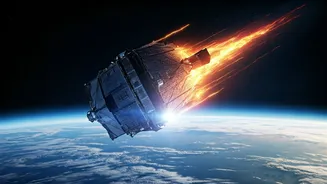

Mission's End Approaches
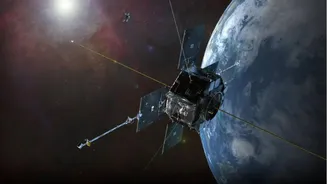
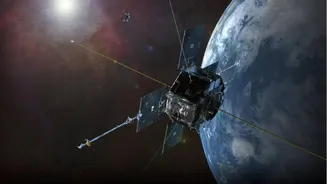
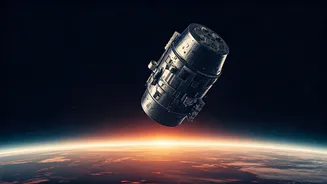
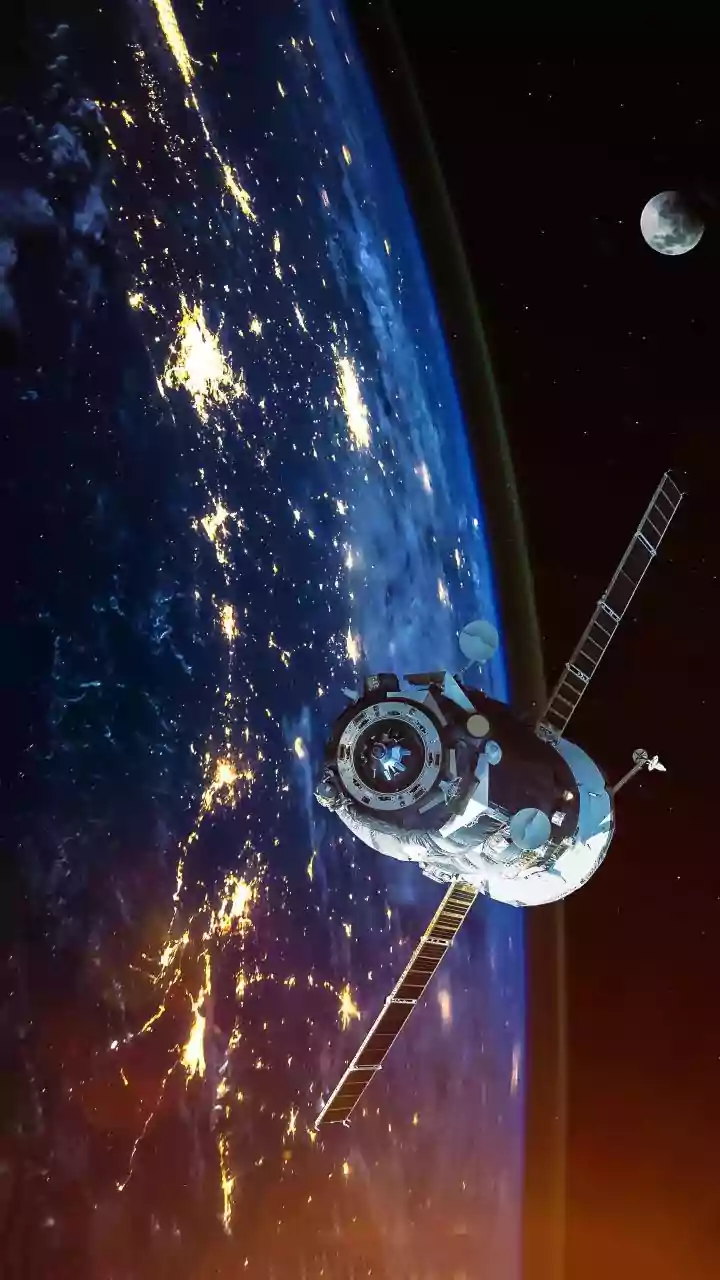
After an impressive seven-year mission, far exceeding its initial two-year objective, NASA's Van Allen Probe A, a robust 600 kg (1,323 pounds) spacecraft,
is poised for its final act: re-entry into Earth's atmosphere. Launched in August 2012 alongside its twin, Van Allen Probe B, this probe was designed to investigate the complex and crucial radiation belts that envelop our planet. These doughnut-shaped regions, named after the pioneering scientist James Van Allen, are vital for shielding Earth from harmful solar radiation and charged particles. The mission concluded its scientific operations in 2019 when both spacecraft exhausted their fuel, rendering them incapable of maintaining their orientation towards the Sun. Although initial predictions suggested a re-entry around 2034, a more active solar cycle, particularly the solar maximum in 2024, has accelerated Probe A's descent back to Earth, making its re-entry an earlier-than-anticipated event. Van Allen Probe B is also expected to return to Earth, though anticipated to do so sometime before 2030.
Understanding Radiation Belts
The Van Allen belts, the focus of this groundbreaking NASA mission, are dynamic regions of energetic charged particles trapped by Earth's magnetic field. They form two distinct, torus-shaped zones surrounding our planet, playing a critical role in planetary defense. These belts act as a natural shield, deflecting a significant portion of the high-energy particles emanating from the Sun, such as those found in solar storms and the solar wind. Without these protective layers, life on Earth would be far more vulnerable to the harsh conditions of space. The Van Allen Probes provided invaluable data over their extended operational period, helping scientists to better understand the composition, dynamics, and protective capabilities of these essential magnetospheric regions. The information gathered has been crucial for improving our models of space weather and its potential impact on technology and astronauts.
Re-entry Risks Minimized
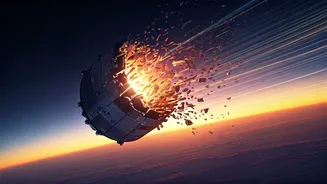
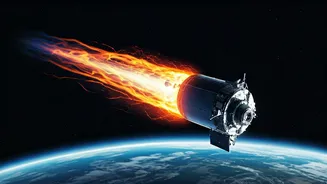
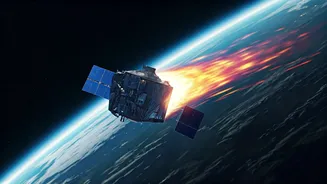
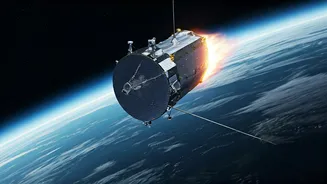
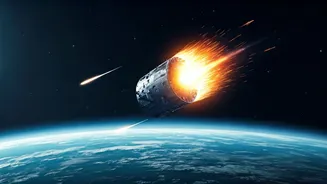
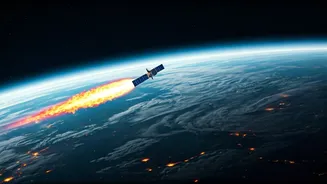
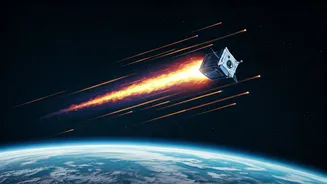
NASA anticipates that Van Allen Probe A will largely disintegrate and burn up upon its fiery plunge through Earth's atmosphere, a common fate for defunct satellites. However, the US Space Force has indicated that some components might survive this atmospheric ordeal. Despite this, the probability of any debris posing a risk to individuals on the ground is exceptionally low, estimated at a mere 1 in 4,200. This minimal risk is largely attributed to the vast coverage of Earth by oceans, which occupy approximately 70 percent of its surface. Therefore, any surviving fragments are highly likely to impact water bodies, rather than populated land areas. This natural buffer significantly reduces the potential for any direct harm or damage to life and property, making the satellite's return a cosmic event with negligible terrestrial consequences.