





Heavenly Spiti Valley
Nestled within the rugged terrain of Himachal Pradesh, Spiti Valley presents a landscape of unparalleled raw beauty, vast open vistas, and tranquil hamlets.
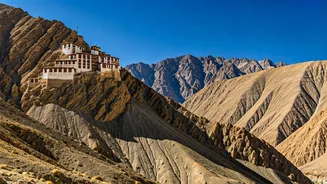
Despite its photogenic charm gracing social media feeds and featuring in occasional Bollywood productions, the region has largely eluded the throngs of mainstream tourism. This ethereal destination recently captured the attention of industrialist Anand Mahindra, who shared an image of the famed Key Monastery, perched majestically amidst barren hills under an expansive sky. He eloquently described its understated grace, proclaiming it as tangible evidence that paradise can indeed manifest on Earth. Mahindra expressed bewilderment as to why such a visually stunning locale has not become a magnet for widespread tourist activity, hinting that its profound quietude might be the very essence of its special character.
Silence as the Gift
In his reflections on X, formerly Twitter, Anand Mahindra highlighted the spiritual resonance of Key Monastery in Spiti, referring to it as living proof of heaven's presence on our planet. He mused about the enigma of its relative obscurity from global tourist circuits, proposing that its profound silence is, in fact, its most valuable offering. Social media users responded with enthusiastic agreement, emphasizing the need to preserve such pristine locations. One user, identifying as a native of Himachal Pradesh, noted that Key Monastery transcends mere scenery, acting as a spiritual anchor for visitors, and that Spiti draws not crowds but individuals seeking introspection. Another commented on the unparalleled peace and tranquility, likening it to a hidden treasure whose beauty and serenity deserve wider appreciation. The sentiment that 'Earth's way of whispering that peace still exists' and that 'some silences speak louder than any crowd' resonated deeply with many.
Preserving its Charm
The discussion surrounding Spiti Valley's allure continued with further user comments reinforcing the idea that its silence is its greatest asset. One individual explicitly stated that mass tourism would inevitably erode its unique charm, underscoring the importance of maintaining its current state. Another user described Key Monastery as feeling 'otherworldly,' attributing its special quality to its silence and remoteness, as if the mountains themselves act as guardians of its peace. A more profound perspective suggested that the world might not flock to Spiti because the soul must first be receptive to such silence to truly grasp what the valley offers. These comments collectively posit that certain locations are not designed for conventional tourism but rather for a more personal, pilgrimage-like experience. Key Monastery, in this view, stands as a beacon of tranquility in an otherwise tumultuous world, a potent reminder that the most significant elevations are achieved not solely through physical ascent but through inner stillness, its purity protected by its inherent ruggedness.
Journey to Key
For those inspired to experience the serenity of Key Monastery, travel from Shimla involves a carefully planned route. The journey typically begins by heading to Narkanda, then proceeding through Rampur and Reckong Peo, with a stop at Tabo before finally reaching Kaza, the gateway to the upper Spiti region. Public transport options include HRTC buses operating from Shimla. Alternatively, shared taxis and jeeps provide more flexibility for travelers. The optimal period for visiting this remote sanctuary is during the summer months when the mountain roads are generally clear and accessible. It is important for foreign travelers to note that special permits are required for entry into certain areas. Prospective visitors are also advised to check the latest bus schedules on the HRTC website in advance to ensure a smooth travel experience to this magnificent Himalayan wonder.