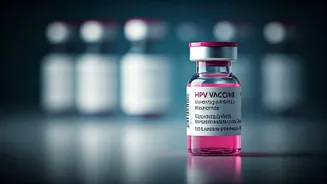








Massive Vaccination Drive
Gujarat has successfully administered the Human Papillomavirus (HPV) vaccine to an impressive 5 lakh girls, marking a significant achievement of 90% coverage
against the targeted number under the national program. This extensive health initiative was meticulously planned and executed across more than 2,200 healthcare facilities strategically located in 34 districts and 8 major urban centers throughout the state. The vaccination drive commenced on March 2, aiming to immunize all identified eligible teenage girls. The health department had precisely identified 5,43,483 teenage girls as eligible recipients, with the goal of completing their vaccinations within a 90-day period following the program's launch on February 28. This widespread effort showcases a robust public health strategy focused on preventing HPV-related diseases.
Unwavering Safety Profile
The success of Gujarat's HPV vaccination campaign is further bolstered by an impeccable safety record. Health Minister Praful Pansheriya highlighted the campaign's remarkable progress, conducted under the esteemed guidance of Chief Minister Bhupendra Patel. Crucially, not a single instance of serious adverse side effects has been reported following the vaccination, a testament to the vaccine's absolute safety. This crucial data point affirms that the vaccine is 100% safe for administration. The accessibility of this vital protection is paramount, with the vaccine readily available for all 14-year-old girls. It can be obtained at all major healthcare institutions, including medical college-affiliated hospitals, district hospitals, sub-district hospitals, as well as community health centers (CHCs), primary health centers (PHCs), and urban primary health centers (UPHCs) scattered across the state, ensuring broad reach and availability.
Vaccine Details and Reach
The vaccination program in Gujarat utilizes Gardasil-4, a quadrivalent HPV vaccine manufactured by MSD India. This specific vaccine offers comprehensive protection by targeting four key HPV types: 16 and 18, which are the primary culprits behind cervical cancer, and types 6 and 11, which are associated with genital warts. The extensive network of over 2,200 health centers, spread across 34 districts and 8 key cities, facilitated the widespread implementation of this critical public health measure. The drive officially began on March 2, ensuring a systematic and organized approach to reaching the eligible population. This strategic deployment of resources and a well-defined vaccine choice underscores the state's commitment to leveraging effective medical interventions for disease prevention.