




Passenger Raises Concerns
The controversy began when a passenger, Avani Bansal, traveling on the Vande Bharat Express from Prayagraj to Delhi, shared a video on X detailing her
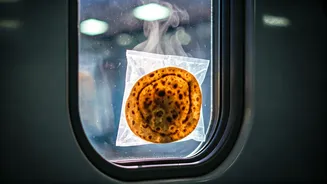
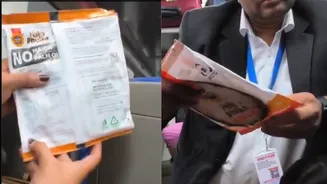
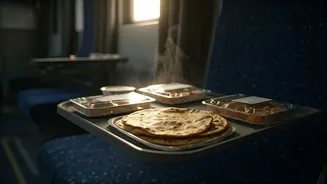
experience. She observed that rotis and kachoris were served piping hot while still sealed within their plastic packaging. Bansal questioned a train staff member, who seemingly confirmed that the food was heated without opening the packets, despite the packaging not indicating any microwave-safe capabilities. She noted that this practice occurred on both her Vande Bharat and a previous Rajdhani train journey. The packaging for the rotis, labeled "Halka Phulka," only mentioned storage in a cool, dry place, with no explicit instructions for in-pack heating. Bansal expressed worry that this practice could pose a public health risk, raising questions about the potential migration of chemicals from heated plastic into food, especially when done at scale.
IRCTC's Clarification
In response to the viral video and subsequent passenger queries, the Indian Railway Catering and Tourism Corporation (IRCTC) provided a statement to address the food safety concerns. IRCTC clarified that the food served on Vande Bharat trains is prepared in their base kitchens and then packaged in containers that are both biodegradable and microwave-safe. They emphasized that all packaging materials used have received approval from the Food Safety and Standards Authority of India (FSSAI) and are specifically designed to preserve the quality and hygiene of the food during its journey to the passenger. Regarding the heating process, the corporation assured that the containers are indeed designed for microwave heating without negatively impacting the food's safety or its flavor. IRCTC reiterated its commitment to stringent quality control measures and adherence to food safety regulations for all meals provided on the Vande Bharat Express, aiming to provide a comfortable and sanitary dining experience.
Understanding Packaging Codes
Further discussion erupted online regarding the specific plastic packaging, with some users pointing out a recycling symbol on the packet – a triangle containing the number 7. An AI tool explained that this symbol, a Resin Identification Code (RIC) 7, signifies 'Other' plastics, which can include materials like polycarbonate or bioplastics. It is primarily for recycling identification and does not automatically denote food safety or microwave suitability. Experts generally advise caution with plastics categorized under RIC 7, as certain types may contain substances like BPA that could potentially leach into food when subjected to heat. Therefore, it is crucial for consumers to always look for explicit "microwave safe" labels or FDA approval on packaging before heating, rather than relying solely on general 'food grade' designations. The origin manufacturer's specifications would provide the definitive information on the suitability of these particular packets for in-pack heating.
Passenger Trust and Future
The incident and the subsequent exchange between the passenger and IRCTC have highlighted the importance of transparency and clear communication regarding food packaging and heating methods, especially on premium train services. Many travelers expressed that if sealed food packs are to be heated directly, the packaging must carry explicit certification for such use, backed by thorough migration testing. This ensures that no harmful chemicals are released into the food. IRCTC's catering arm subsequently requested the passenger's PNR and mobile number to investigate the matter further. The railway corporation reiterated its ongoing efforts to enhance passenger services and proactively address any feedback or concerns raised, emphasizing their dedication to maintaining passenger trust and ensuring a safe and pleasant dining experience on all their trains.