
Transparent Insulation Explained
The concept of see-through insulation is rooted in materials science, focusing on creating substances that effectively trap heat while allowing light to
pass through. Traditional insulation often relies on opaque materials that block both light and heat transfer. This new insulation utilizes innovative materials with unique properties. These materials have the ability to impede the flow of heat, thus maintaining the indoor temperature. This technology is designed to trap infrared radiation, the primary means by which heat escapes from buildings. By using these types of materials, buildings can minimize heat loss during cold periods and reduce energy demands.
How It Works Technically
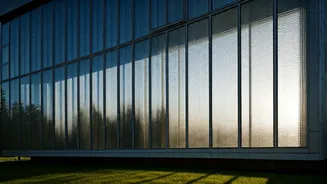
The mechanics behind transparent insulation are complex, involving carefully engineered structures and materials. The core is the arrangement of the insulation, which is created to minimize heat transfer through various methods. One of the main approaches involves using a material with a high degree of transparency to visible light. This allows sunlight to enter the building, providing natural light, while simultaneously trapping the heat that gets absorbed. Another method involves creating a material with a cellular structure. This structure creates air pockets, which slow down heat transfer by convection. Moreover, the surfaces of these materials are often treated with coatings that reflect infrared radiation, effectively bouncing heat back into the building. These coatings and structures work together to create an insulation system that is highly effective at retaining heat.
Impact on Buildings' Efficiency
The introduction of transparent insulation has the potential to enhance the energy efficiency of buildings significantly. By reducing the rate at which heat escapes during winter, this technology cuts down the demand for heating systems. This leads to lower energy bills and a reduced carbon footprint. Furthermore, by letting in sunlight, it decreases the need for artificial lighting during the day, further cutting energy usage. The use of this type of insulation makes buildings more comfortable. It can help maintain a more constant temperature indoors, which enhances the living and working environment. The long-term implications are substantial, with the potential to transform how we design, build, and maintain structures to make them more energy efficient.
Real-World Applications Explored
The applications of transparent insulation are extensive, spanning various building types and climates. It can be used in new construction, where it can be integrated into walls, roofs, and windows, thus optimizing energy efficiency from the outset. In existing buildings, it can be retrofitted, enhancing their thermal performance without major structural changes. This technology is specifically beneficial in regions with significant temperature variations. In colder climates, it minimizes heat loss, whereas in hotter climates, it reduces heat gain, thus minimizing the need for air conditioning. Beyond residential buildings, it can be applied to commercial and industrial buildings, leading to considerable energy savings. The versatility of transparent insulation ensures it can be adapted to various architectural styles and building designs.
Challenges and Future Prospects
Despite its promising features, transparent insulation confronts specific challenges. One significant factor is the cost of materials and production. As the technology matures, economies of scale and better manufacturing techniques may make it more affordable. Durability and long-term performance are also major considerations. Researchers and engineers are working to enhance the resilience of these materials to withstand environmental factors, ensuring they maintain their efficiency over time. The future prospects of transparent insulation are very bright. As research progresses and the technology becomes more refined, it is expected to become a central component in sustainable building practices. This technology is expected to play a key role in making buildings more energy-efficient, environmentally friendly, and comfortable for occupants.